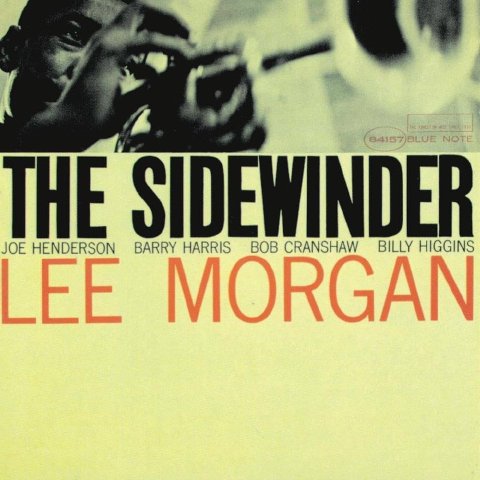
What is it about Lee Morgan that demands my attention? Here I am casually listening to one of the greatest albums of all time — “I’m Old Fashioned” is on, Morgan’s solo comes last, and my head snaps up from what I am doing.
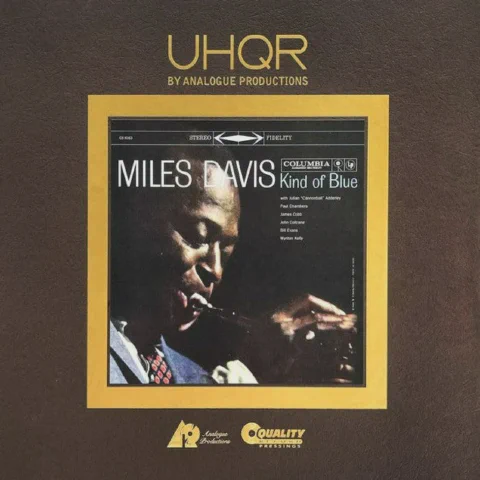
Whereas Miles is wispier, smoother, Morgan is stout and defiant. All right, both are defiant, which is one of the things I love about MD. But Morgan’s tone runs bright and almost flamboyant, where Davis’ is darker, more somber.
This was my first serious listen to Blue Train on the new Inspire SET, volume hovering around 80%—and this little amp absolutely delivers. There’s something about the SET presentation here that feels right for a record like this: dimensional, unforced, revealing without turning analytical. The more I listened, the more the stage came into focus, not as an abstract audiophile trick, but as a room with bodies in it.
And make no mistake: this is a great-sounding record. Van Gelder was already deep into his craft. The placement is precise. The horns occupy real space. The drums and bass sit firmly to the right, piano near the center, Coltrane just left of it. As the album unfolds, you start hearing the room itself—reflections, depth, the way the drums bloom and decay. By the third night, I could almost see the old lights in the studio.
Still, this is also one of those albums I may remember as being better than it actually is.
That’s not a knock, but a (re)assessment from my current listening position.
Blue Train, like Kind of Blue, was one of the first jazz albums I encountered during my earliest audiophile phase. I’ve lived with it for years. I know it well. And hearing it now, with older ears and a system that tells fewer lies, I’m struck by how good it is—rather than how singularly transcendent I once believed it to be.
That realization doesn’t diminish the album, but just brings it back to earth.
The Morgan Question
Let’s get this out of the way: Lee Morgan might be the best thing about this album.
That’s not heresy. It’s what I’m hearing right now.
From the opening moments of the title track, Morgan’s trumpet commands attention. He’s precise, bright, and controlled, but never stiff. I’m generally not a fan of the Bird-style running solo, but Morgan makes even those passages sing. His phrasing has direction. His tone is pure and forward, sometimes a little in-your-face in the best possible way. As his solos progress, he starts to swing harder, leaning into the groove rather than racing over it.
On “Blue Train,” the front-line trio sounds almost stacked on top of each other, and Morgan reaches low, grounding the harmony before Coltrane comes wailing in with the first solo, just left of center stage. The backup horns retreat slightly, stepping back into the soundstage, and suddenly the room feels deeper. It’s thrilling.
“I’m Old Fashioned” was the surprise favorite on this listen. I used to gravitate toward “Blue Train” and “Moment’s Notice,” but tonight it was the ballad that won me over. I’m getting slower in my old age, and so I have a new appreciation for things that take their time. Coltrane’s ballad tone here is gorgeous—warm, searching, present. The rhythm section locks in beautifully, brushes whispering beneath him. Curtis Fuller and Kenny Drew both play solid, tasteful solos.
And then Morgan enters.
He pops in after Drew and steals the show. Lively, relaxed, impossibly present. His tone blooms in the room. He ends the track—and it feels like exactly the right choice.
Does Morgan outshine Coltrane here? Maybe. Or maybe I’m simply more attuned to Morgan right now, after spending so much time with him earlier in the constellation. Coltrane was still a young bandleader at this point, still working things out. Morgan, by contrast, arrives fully formed. There’s no hesitation in his playing. He knows who he is.
Songs That Stick
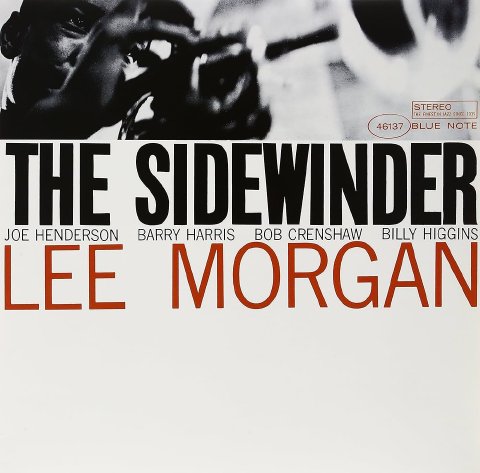
“Moment’s Notice” remains an earworm of the highest order. Like “The Sidewinder,” it lodges itself in your head for days. The melody is buoyant, joyful, and full of motion. Coltrane’s solo is fast but never hurried, and I love how the rhythm occasionally resets into that halting pulse—as if a paragraph is ending, or a clock is winding down—before surging forward again.
Morgan sounds like he’s had espresso on this one. His solo is energetic, expressive, and sharp-edged without being brittle. When Paul Chambers steps in for the bass solo, though, the album briefly loses me. The transition feels awkward, and the arco moment—did he have to pick up the bow?—still puzzles me. Historically, I know why Chambers did this: lyrical contrast, classical lineage, a way of expanding the bass’ expressive range. But emotionally, in the middle of this track, it pulls me out of the flow.
Both things can be true.
“Lazy Bird” closes the album with a wink and a nod to Bird himself. Morgan plays the melody—lazy, but not too lazy—before taking flight into a frenetic solo that is anything but indolent. When Coltrane enters, it almost sounds like his mic was late to the party, hastily brought up by an alert engineer. Curtis Fuller adds those wonderful trombone bursts—why don’t we hear more trombone in small-group bop?—and Philly Joe Jones keeps everything on track, light and deft.
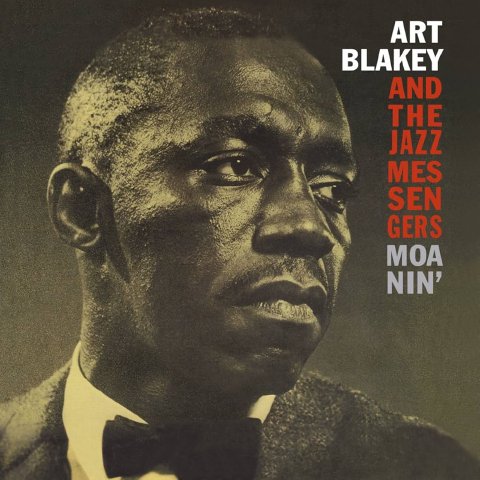
About Philly Joe: he’s solid, swinging, reliable. But compared to drummers like Higgins or Blakey, he doesn’t announce a unique personality here. I’m starting to wonder if that’s just the nature of bop drumming, or if I’m listening for something that only occasionally appears. I’m not ready to resolve that question yet—and I don’t think I should.
The Amp, the Album, the Bridge
The Inspire SET made this record feel alive in a new way. The bass solo on the title track, quiet and intimate, revealed just how well this amp handles low-level detail. Chambers and Philly Joe seem to lean toward each other in that moment, subtle and tactile. It’s beautiful.
And that’s really where I land with Blue Train: affection.
Not awe. Not revelation. Affection.
It’s great hearing it again with my ears now, recognizing that it isn’t uniquely great so much as part of something great. This really was a golden age of bop—an embarrassment of riches, record after record, musician after musician, all operating at an extraordinarily high level.
Blue Train doesn’t stand alone on a pedestal anymore. Instead, it sits comfortably among its peers, doing exactly what it was meant to do.
And that makes it the perfect bridge—from the hard bop world I’ve been living in all winter to what’s coming next. Kind of Blue, perhaps predictably, has always been my favorite bop album, but I won’t be listening for history or reputation.
I’ll be listening for space.
And that record knows how to give it.