Some records ask to be judged. Some ask to be decoded. Kind of Blue does neither. It waits.
Listening again—now, with winter settled in and a new SET amp warming the room—the album doesn’t feel like a monument so much as a destination. It is calm without being passive. Spacious without being empty. Nothing here hurries, yet nothing drags. There are no fast tunes, no technical gauntlets thrown down. And still, the pacing is perfect. Every track arrives exactly when it should and leaves before it overstays its welcome.
That sense of inevitability is not accidental. It is structural, and it begins with modality.
Modality, or Why This Music Breathes
Before Kind of Blue, much of modern jazz lived inside rapid harmonic motion. Bebop and hard bop asked soloists to negotiate fast-moving chord changes, to prove fluency through velocity and density. Notes piled up. Lines ran. Brilliance often meant speed. Right, Bird?
Modal jazz breaks that contract.
Instead of racing through progressions, modal pieces sit on a single scale or mode for long stretches. Harmony no longer pushes the soloist forward. It holds them in place. That changes the stakes. Without constant harmonic movement, there is nowhere to hide. Every note has weight. Every pause matters. Tone, touch, and phrasing become the real currency.
You can hear this immediately on Kind of Blue. The music unfolds horizontally rather than vertically. Solos don’t climb; they wander. They circle. They consider, question, meander, even. This is why the album feels slow even when it isn’t, and why it feels expressive without ever feeling indulgent.
Modality isn’t just a technical innovation for musicians. It produces an audible ethics. It rewards patience. It exposes intention. It makes silence part of the argument.
The Two-Note Manifesto
“So What” opens with one of the most economical and memorable gestures in all of jazz: two notes. Not a theme, exactly. More of a posture.
Those two notes are not there to charm. They don’t explain themselves. They assert presence. They say: this is where I’m standing. And while I can’t prove it, but I know it’s true: Miles Davis wanted to call this song “Fuck You,” but was talked out of it.
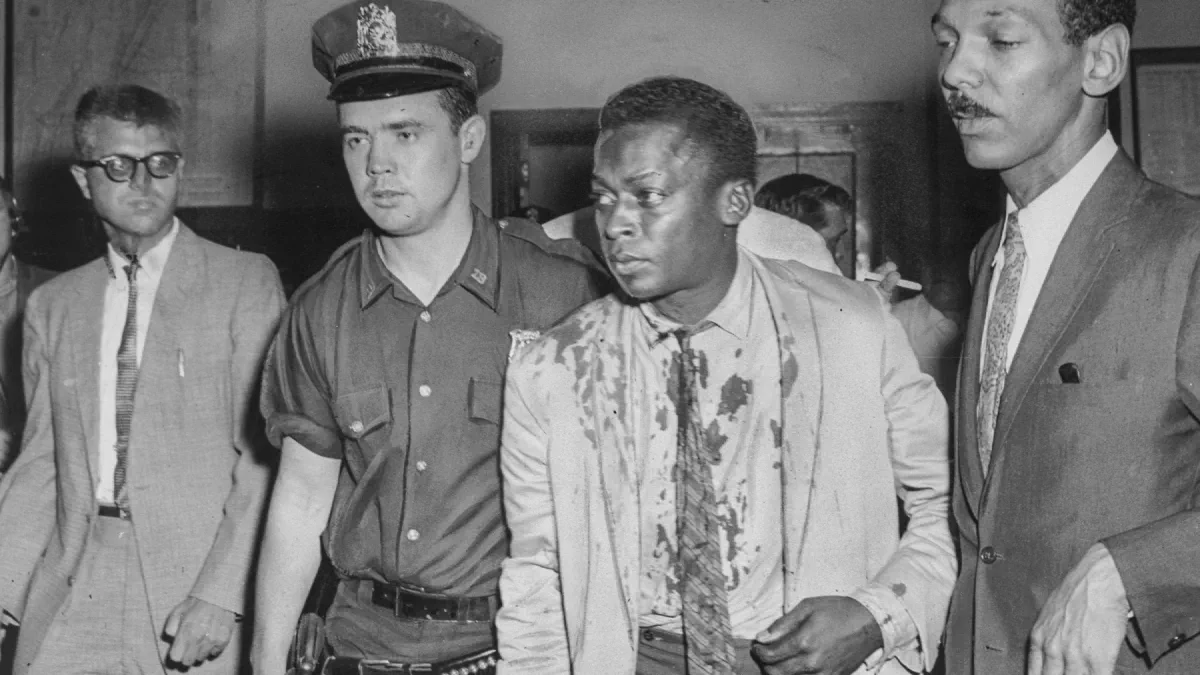
It’s hard not to hear that phrase as refusal, and difficult not to see its relevance today. Around this same period, Miles Davis is beaten and arrested outside Birdland for the crime of standing with a white woman and not moving fast enough for a police officer. In his autobiography, he connects that violence to institutional training and ideology, describing police tours to Germany meant to “learn police shit” not long after the war. The famous photograph of Davis emerging from jail with blood on his shirt belongs to this moment.
Placed against that reality, “So What” stops being cool abstraction. Those two notes become stance. You don’t like me here? So what.
Miles’ opening solo on the track is legendary precisely because it refuses excess. It’s conversational. A stroll, not a sprint. A little talking to, a little strutting, then a handoff to the saxophones. Leadership here isn’t dominance, but confidence without explanation.
Sound as Politics: Fred Plaut vs. Rudy Van Gelder
You can hear immediately that this is not a Rudy Van Gelder recording. The difference isn’t subtle.
Kind of Blue was engineered by Fred Plaut, and his aesthetic could not be further from Van Gelder’s intimate, leader-forward sound. Van Gelder isolates. He places the bandleader apart, often stage-left, close and tactile. The room feels pressurized, and the hierarchy is clear.
Plaut’s soundstage is symmetrical, wide, and democratic.
The speakers disappear because nothing is pushed toward you. There are caverns of dark between the musicians (yeah, some of that could be the Had SET). The rhythm section forms a triangle: bass centered, drums to the right, piano to the left. The horns arc across the front: John Coltrane on the left, Miles largely centered, Cannonball Adderley on the right.
This is not an accident, but a spatially rendered philosophy. Miles does not stand apart here. He stands among. The stage eschews hierarchy. Everyone is audible. Everyone is exposed. Democracy isn’t metaphorical in this mix; it’s physical.
Bill Evans and the Invitation to Space
The album announces its intentions in its opening seconds. Those floating, unhurried piano chords belong to Bill Evans, and they don’t introduce a tune so much as a space. Evans’s touch is famously less percussive and more atmospheric. He turns the piano into environment—and almost steals the show.
That’s why “Blue in Green” feels like his song even though authorship remains contested; in his autobiography, Davis says he wrote most of the songs with Evans in mind. The sadness there is inward, not theatrical. Davis and Evans trade phrases like confidences. When Trane enters, it feels like sunlight breaking through—brief, warming, but fleeting. Evans’ solo remains unlike almost anything else from the bop era: ethereal, fragile, interior. At least that’s my experience so far in my tour this winter.
Why did I never realize how integral Evans was to this album?
It makes sense that Evans sits out “Freddie Freeloader.” That tune leans bluesier, more grounded, and Miles brings in Wynton Kelly for exactly that reason. Evans would have blurred the edges too much. His presence changes the weather. For the better, if you ask me.
Three Horns, Three Worldviews
This album is also a study in temperament.
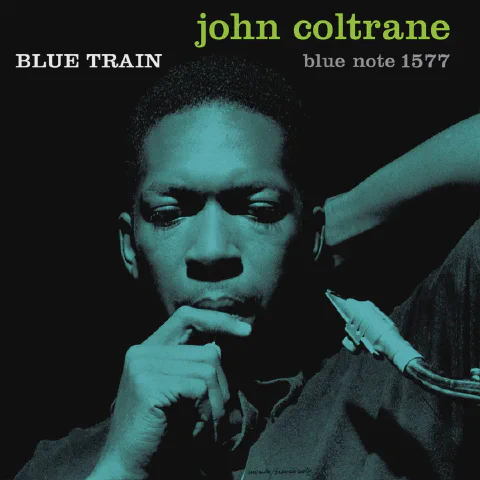
Coltrane, even here, carries a sense of searching intensity. He waits, then surges. He wails, yelps, stretches. There’s wildness under the surface, but also discipline. By this point, he knows he’s onto something, even if he hasn’t fully stepped into it yet—though he had just released Blue Train, so I’m sure he had some idea. His solo on “Flamenco Sketches” may be his finest moment on the record: slow, assured, inevitable. I actually may like it better than anything on Blue Train, too.
Adderley, by contrast, brings joy. His alto sings. He’s melodic, buoyant, almost giddy. Where Coltrane probes, Cannonball embraces. It’s not hard to imagine him dancing down the street to meet his girl, anticipation in every step. When Adderley eventually leaves Davis’ band, the balance collapses. Davis himself later admits the group could survive losing Bill Evans and even Trane—but when Cannonball moved on, he knew it was over.
Miles stands between them. Cool control. Not aloofness, but restraint. He knows exactly when to step back. His muted solos—especially on “All Blues”—feel like memory speaking. He messes around on the outro, reminding you that control doesn’t preclude play.
Slowness, Exposure, and the Blues as Atmosphere
Why do the slow tracks keep winning?
Because slowness here is not comfort. It is risk. I have a feeling these songs are more challenging to play than many faster ones.
“Blue in Green,” “All Blues,” “Flamenco Sketches”—these pieces foreground tone over technique, intention over speed. They require trust. They make silence audible. They ask musicians to commit to being heard rather than being impressive.
This is where the album’s relationship to the blues becomes clear. The blues here is not structure. It is atmosphere. Condition. Coloring. Everything emerges from it, but nothing is confined by it. That’s why the title hedges: Kind of Blue. Not the blues themselves, but their presence everywhere.
“All Blues” isn’t about one sorrow. It’s about the condition.
Ending, Quietly
On a second-day listen—speakers nudged closer, Inspire SET glowing, a high-resolution UHQR rip feeding the system—Kind of Blue doesn’t grow louder. It grows clearer. More centered. More intentional. You start hearing the room. The reflections. The weight of the ride cymbal. The snap of bass strings just before a solo. The way Miles’ final notes land low and soft, easily missed if you’re not paying attention.
This record does not argue. It occupies.
It insists on presence in a world that keeps asking certain bodies to disappear. It refuses speed as virtue. It refuses explanation as obligation. It gives you space and trusts you to stay.
If hard bop was about heat and assertion, Kind of Blue is about clarity. Not transcendence. Clarity.
And clarity, once heard, is hard to unhear, eh, audiophiles?
Listen closely. These musicians still have so much to tell us.