Spinning Somethin’ Else after The Sidewinder feels like stepping out of a bustling city street into a dimly lit jazz club where everything is upholstered in midnight blue. The energy shifts. Hard bop’s attitude gives way to something cooler, sleeker—almost conspiratorial. And of course, Rudy Van Gelder is behind the console, shaping the soundstage like a sculptor working in shadows and brass.
What struck me first is how Cannonball Adderley and Miles Davis occupy the front of the mix together. They both stand dead center, maybe a little too closely for comfort, like two old friends leaning across the same barstool. Miles sits just to the left, Cannonball just right, and behind them the rhythm section keeps a respectful distance: Art Blakey shading the beat with brushes and tight snare whispers, Sam Jones holding the harmonic floor, and Hank Jones comping on a piano that sounds suspiciously like an upright. Only Van Gelder could make an upright piano sound this dignified—yet it still has a woody, cardboard edge that never quite lets me forget its humble origins.
Side A: Warmups & Invitations
The album opens tenderly with “Autumn Leaves.” Davis is the one who gets to set the tone: muted, cool, a little fragile around the edges in a way that only makes the melody more beautiful. Cannonball joins in like a warm breeze rising behind him, but this is very much Miles’ corner of the stage. It makes sense—he famously “directed” this session, even though it bears Adderley’s name. “Love for Sale” works the same way: established standards, hummable melodies, the horns taking polite turns. These tracks feel like stretching exercises, loosening the shoulders, cracking knuckles before the real work begins.
Then the record tilts. “Somethin’ Else” arrives and earns its name immediately. Miles drops the mute and steps fully into his power. The air sharpens. Cannonball responds with a solo that practically shouts, “All right, let’s really do this.” The tune swings harder, feels looser, and the band stops being careful. It’s the first moment the session stops being polite and starts being alive.
Interlude: On Power, Presence, and Turning Up the Damn Volume
This is exactly what the Interludes should be: the musical equivalent of walking out of the club for a smoke break and suddenly hearing the distant roar of an arena show.
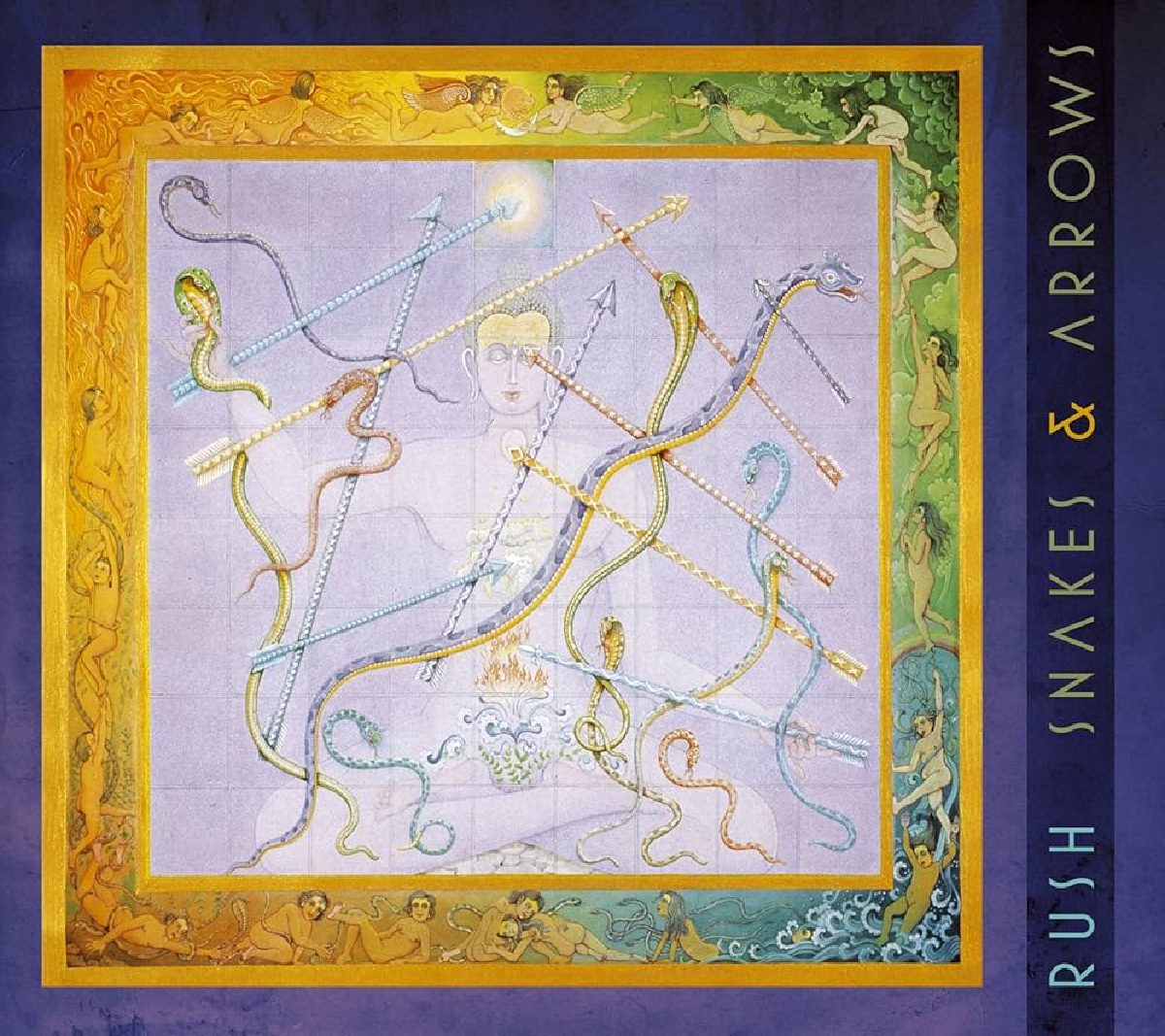
I detoured into Rush’s Snakes & Arrows for a few tracks. Rush never translates well at low volumes; it’s like trying to admire a mural through a keyhole. When you push your amp, the image snaps into place: Geddy’s voice gets body, Neil’s kit stops sounding like scattered percussion and becomes the cathedral-sized architecture it’s supposed to be.
Giles and I visited Evolution Home Theater last Thursday for another open house—always educational and always a good time. Here, I had a different experience in front of big systems, driven by these huse amps from McIntosh and Audio Research that looks like they need a small nuclear reactor to keep them humming. Those big hefty amps don’t just “play music”—they energize rooms. The sound becomes tactile. Presence replaces volume as the metric. You feel the music. Air moves. The listening experience becomes visceral and less ceberal.
Hard bop rarely demands that kind of brute-force power—though it loves headroom—but rock absolutely feeds on it. I suspect that bands like Rush require a more muscular amp. Some music calls for delicacy; some calls for horsepower. Good systems do both. Great systems do both with magic. With a bit more juice, my system began to make Rush sound right. Maybe I need to audition some ballsier amps?
Back to the Session
“One for Daddy-O,” written by Cannonball’s brother and trumpeter Nat, is where Adderley finally claims some real estate. It’s a slow, swinging curveball—limber, unfussy, and probably my favorite Cannonball moment on the album. He’s relaxed here, but sharp; there’s a slyness to his phrasing that hints at how much personality he packed into his horn.
“Dancing in the Dark” is pure ballad magic. Miles steps out entirely, leaving Cannonball with a stripped-down quartet. The result is tender and unhurried—one of those late-night tracks that proves I’m a ballad lover whether I want to admit it or not.
“Alison’s Uncle (Bangoon)” closes the album with exactly the kind of energy a record like this needs. Fast, bright, sharp-edged. Davis leads the charge, Cannonball matches him lick-for-lick, and Blakey finally—finally!—gets to rattle the cage a bit. It’s a rollicking closer that hints at the fire these musicians carried in their real working bands. Still no bass solo, but that’s Blue Note for you: Cranshaw, Jones, Chambers, Carter—these guys often get the satisfaction of knowing they’re indispensable without getting the mic.
Coda
The more I hear Somethin’ Else, the more I appreciate it as a conversation between two giants rather than a Cannonball showcase. Early tracks play it safe, but once the album hits its midpoint, it takes off. The title track and everything after it have a spark that lingers. And “Dancing in the Dark” seals the deal: Adderley could turn even the simplest tune into something luminous.