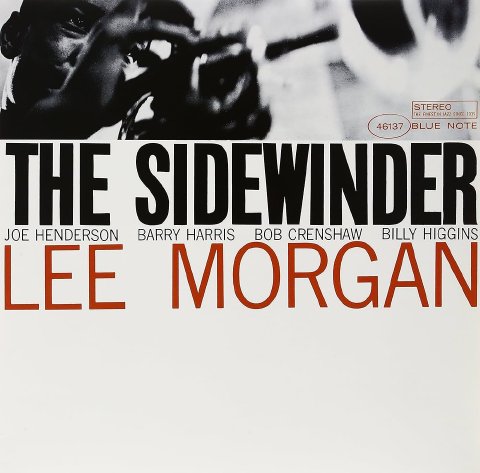
Dropping the metaphorical needle on The Sidewinder again for my inaugural monthly playlist felt a bit like meeting an old friend after years apart and realizing they haven’t aged a day—maybe even picked up a little more charm. I’ve written about this album before, but hearing it now, in the context of this December hard-bop constellation, I’m struck by how perfectly it still defines what “jazz” means in the cultural imagination, especially for white listeners like me who grew up with a certain romantic notion of cool. It’s accessible without being simple, bold without being showy, and impeccably crafted. No wonder this became one of Blue Note’s runaway commercial successes.
What hit me first on this revisit was the production. Rudy Van Gelder’s fingerprints are everywhere, but the “Rudy Van Gelder Edition” I listened to this time seemed even more dialed-in than my flac files. The soundstage is a bit cleaner, edges a little sharper, instruments placed like chess pieces deliberately positioned for maximum tension. And that stage-left throne? That belongs unequivocally to Lee Morgan. His horn sits there like a bright streetlamp in a dark alley—steady, confident, and impossible to ignore.
On “Boy, What a Night,” Morgan’s solo has this “step aside, boys, let me show you something” energy that still makes me laugh. Not because it’s funny, but because of the sheer bravado. It’s the musical equivalent of someone interrupting a meeting just to deliver a one-liner so good the room goes silent.
Joe Henderson, by contrast, is the definition of flow. If Morgan is cut glass, Henderson is honey—warm, viscous, golden. Matching pitches that precisely between trumpet and tenor is hard enough; doing it with such stylistic contrast is a kind of magic. You can hear how deeply they were listening to each other. It’s no surprise that Morgan brought Henderson back for several sessions; they fit together like two halves of the same mischievous grin.
The rhythm section stays tucked a bit behind them, but they’re no less impressive. Bob Cranshaw is as solid as ever, laying down lines with restraint—never intrusive and always supportive. His bass has just enough presence to remind you he’s steering the ship, even when he’s content to let others solo over calm water.
Barry Harris’ piano, though, feels slightly pinched in the center this time—not his playing, just the placement. On my system, he occasionally overlaps Cranshaw’s space. It doesn’t ruin anything; it’s simply one of those little quirks you start to notice when you listen on a good rig and begin caring about where imaginary musicians “stand” in your room. When Harris does step forward, though, he has that clean, almost crystalline bop articulation that reminds you why players adored him.
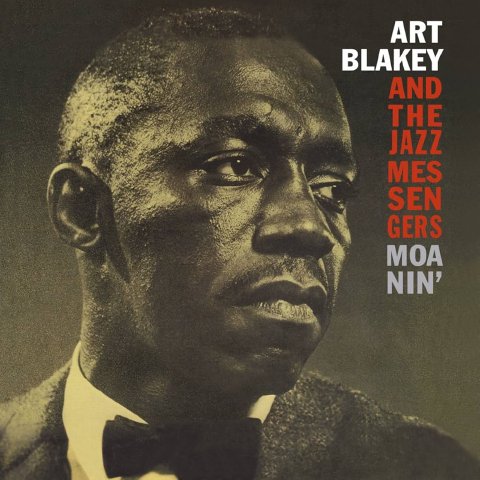
Billy Higgins remains one of the most underrated drummers of the era. Subtle, but not timid at all. His breaks on “Hocus-Pocus” are like someone letting sunlight through half-closed blinds—just enough to remind you how much power he’s holding back. Compared to Art Blakey’s volcanic approach, Higgins is a watchmaker: precise, balanced, economical. And that syncopation on “Totem Pole”? It’s like he’s winking at you. I really appreciated Higgins’ virtuosity this time around, and I’m beginning to appreciate good drummers more and more.
Speaking of “Totem Pole,” the Van Gelder Edition gives us two versions—and honestly, it’s hard to tell them apart at first blush. Both are excellent, and both have that relaxed-but-not-loose feel that defines the tune. Maybe after a few more listens I’ll be able to call winners in this Pepsi Challenge, but right now they feel like identical twins wearing the same shirt.
“Gary’s Notebook,” on this listen, felt a little more daring—slippery lines, harmonies that don’t resolve cleanly, that unmistakable scent of post-bop drifting into the room. You can hear these guys leaning over the balcony rail of hard bop and staring into the new terrain below. This is where we’re going, lads.
What I keep coming back to is this: every time I think I’ve got The Sidewinder “covered,” it surprises me. Not in big ways—no sudden revelations—but in little flashes of precision, interplay, and tone that remind me why Lee Morgan keeps climbing the ranks of my personal pantheon. The album is both comfort food and a clinic. It’s the anchor of this December playlist for a reason: everything else orbits it in some way, and Morgan’s horn is the gravitational pull that keeps the whole constellation from drifting apart.