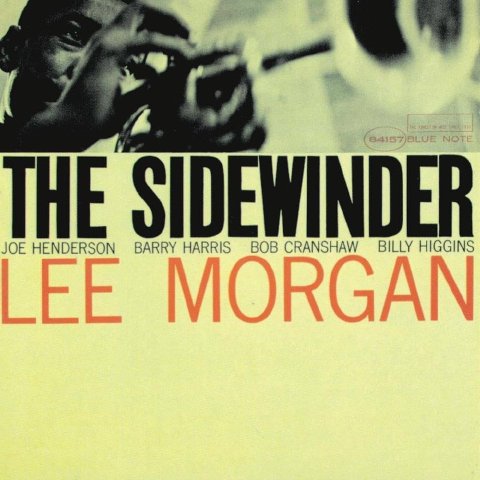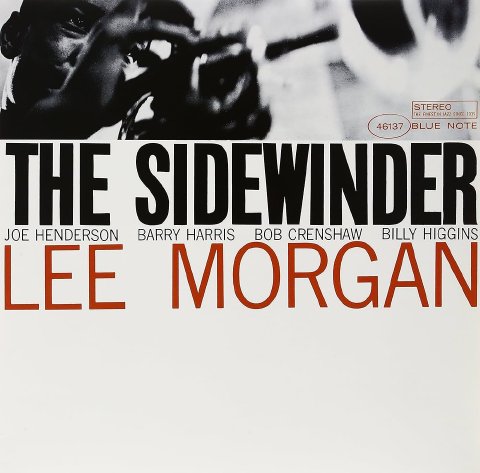
Dropping into Moanin’ after The Sidewinder and Somethin’ Else feels like stepping into a room where the lights have just been dimmed and someone cracked a window for the night air. It’s still unmistakably a Van Gelder space—dark background, crisp outlines, the sense that each musician has been carved into the air with careful hands—but here the edges feel a touch more defined than on the Adderley record. You can sense the room’s boundaries more clearly, as though Blakey and company have rearranged the furniture for you.
And Blakey himself? He’s more dynamic and expressive here than anywhere on Somethin’ Else, already letting you know whose name is on the spine of the LP. He’s not flashy, but you can tell he’s steering the ship—a drummer who doesn’t need fireworks to keep the whole room swinging.
The Call: “Moanin’”
Everything good about this record begins with “Moanin’ ”—one of those undeniable tunes that somehow feels familiar even if you’ve never heard it. Bobby Timmons wrote it, but Morgan and Golson breathe life into its slow-burn gospel invocation. The melody moans, the band answers back, and Lee Morgan enters with a solo that sounds like he’s just kicked the saloon doors open. Raunchy, crying, gloriously theatrical—like he’s telling the rest of the Messengers, “Boys, watch this.” Man, does Morgan cook!
The dynamics rise and fall like the shape of a sermon. Benny Golson’s tenor, deeper and more shadowed than Adderley’s alto, plays the perfect foil: rounded tone, patient phrasing, nothing rushed. The two of them together create a tighter, smokier front line than the Miles–Cannonball pairing on Somethin’ Else. It’s less about cool restraint and more about earthy conviction.
This track alone could anchor the whole December playlist. It’s the sound of hard bop blooming into something iconic.
Golson Takes the Pen
Half the album belongs to Benny Golson as composer, and this becomes one of the new threads in the month’s constellation: the power of strong writing to shape a band’s identity.
“Are You Real” carries that early-’60s jet-set breeze—swinging, urbane, almost cinematic. Golson opens with a solo that struts without showing off, and Morgan follows with another molten ascent into the upper registers. You can hear how Golson and Morgan lock into each other’s phrasing. If Morgan and Henderson felt psychic on Sidewinder, Morgan and Golson feel conspiratorial—partners in crime.
“Along Came Betty” pushes the narrative further. You can practically see her enter through the melody: a femme fatale written into the staff paper. Morgan peacocks through his solo—bright, flamboyant, maybe trying to impress Betty—while Golson plays it cool until he can’t help strutting a little himself. Behind them, Timmons, Merritt, and Blakey keep the groove moving like a late-night walk through a city where you shouldn’t ask too many questions.
Then things get weird, theatrical, and irresistible.
The “Drum Thunder Suite” feels like the moment the album leans over the railing and peers into the unknown. It’s primal, ritualistic—almost like stumbling onto a Polynesian island festival where the dancers are half invitation, half warning. Blakey finally lets himself out of the pocket and into the open air. It’s not a technical showcase so much as a dramatic one, but it fits the Messengers’ ethos: hard bop with a touch of sinister mythos. Hard bop sometimes dips into the carnivalesque—the line between celebration and chaos grows thin. Blakey walks that line barefoot.
Interlude: A Southern Detour
Between spins of Moanin’, I dropped into some Black Crowes—“Twice as Hard,” “Hard to Handle,” “She Talks to Angels”—and the pattern from Somethin’ Else repeated: turn it up, and the whole thing comes alive. “Angels” in particular hit differently—richer, fuller, more emotionally direct.
Maybe that’s the through-line between the jazz this month and the rock detours that keep finding their way into the room: power isn’t always about volume, but sometimes volume is what reveals the power. Some music demands headroom, air movement, a sense that the system is leaning forward with you. These songs sounded good, especially the ballad, so I have to spin more Black Crowes soon.
Coda
Moanin’ deepens the December story beautifully. If The Sidewinder was show and Somethin’ Else was cool midnight blue, Moanin’ is the moment hard bop becomes a language you can speak: earthy, melodic, dramatic, and grounded in the work of musicians who knew how to balance structure with improvisational fire.
Blakey may not have floored me yet, but that’s part of the long arc here—learning to hear him not as a fireworks technician but as a bandleader whose genius was forming these tight, ferocious little universes and letting young lions like Morgan, Golson, and Timmons sharpen their claws inside them.
We’ll get to the fireworks eventually. For now, this is the sound of hard bop taking root.