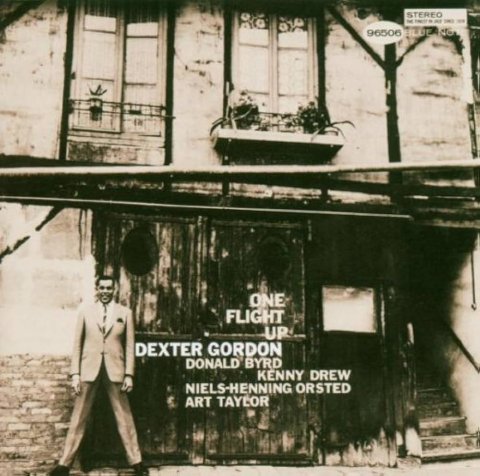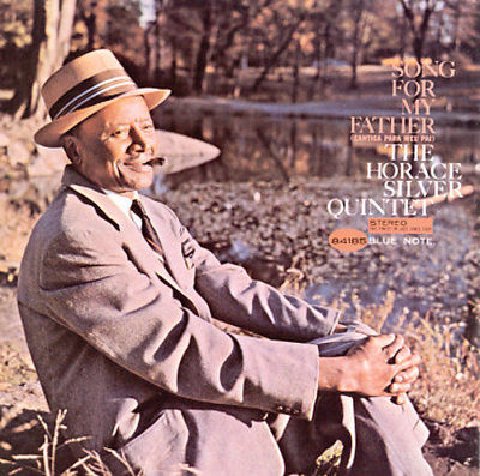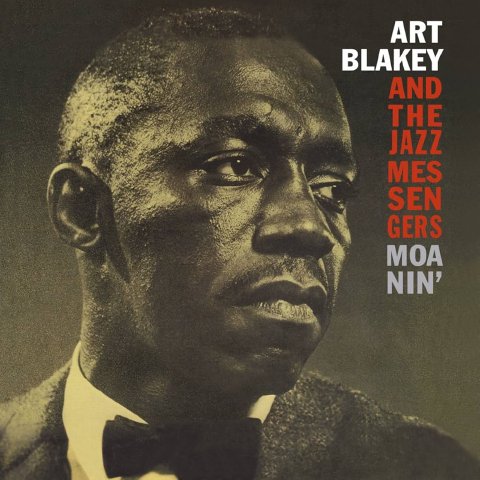
By the time Page One enters the December constellation, the ears are calibrated. After the attitude of The Sidewinder, the drama of Moanin’, and the rhythmic expansion of Song for My Father, this album feels quieter, cooler, and more restrained—almost deliberately so. It doesn’t announce itself. It waits for you to come to it.
Joe Henderson was young when Page One was recorded (1963), and unlike Lee Morgan—who arrived fully armed with bluster, volume, and bravado—Henderson’s intensity was always inward. He didn’t announce himself, but revealed himself in time. That difference matters, especially when you put him next to someone like Morgan, who almost dares the band to keep up. It’s also worth remembering that Page One is Henderson’s debut as a leader, and qquite a good one it is. That’s a different psychological space. When you’re a sideman, you react; when you lead, you design. Henderson seems cautious here—not because he lacks ideas, but because he’s testing how much of himself to put into the frame.
Once again, Rudy Van Gelder delivers a sonic stunner. The soundstage here is immediately familiar—in fact, almost uncannily so. This record sounds nearly identical to Lee Morgan’s The Sidewinder: same spatial layout, same dark background, same crisp instrumental outlines. If Song for My Father widened the room, Page One pulls us back into a familiar architectural space—narrower, more controlled, more nocturnal.
That familiarity may be part of why this album took longer to click.
Joe Henderson is clearly the gravitational center here, but he shares the front line with Kenny Dorham—a fine trumpet player, no question, but not Lee Morgan. Dorham’s tone is rounder, more restrained, less theatrical. And while he and Henderson play well together, they don’t share the psychic bond that Morgan and Henderson had on The Sidewinder. Where Morgan felt like a provocateur, Dorham feels like a craftsman. That difference matters.
“Blue Bossa” opens the album gently, like a window cracked open at night. The melody drifts in on a cool breeze, smooth and controlled. Nothing gets out of hand—not the solos, not the dynamics, not the structure. Henderson, in particular, sounds unusually tame here, especially after the wildness he showed on Song for My Father. Everyone gets a solo except the drummer—sorry, Pete La Roca—but even without fireworks, the track sounds wonderful. That rim-shot, though. Sharp. Precise. Stage-right and cutting clean through the mix.
“La Mesha” takes a different approach: a slow, almost lethargic walk through pathos. Henderson becomes our tour guide here—steady, assured, occasionally playful, but always controlled. Dorham’s solo is competent, but it’s McCoy Tyner who lifts the track. His flittering keys bring lightness and motion, punctuated by assertive bass plucks from Butch Warren. This track doesn’t dazzle, but it rewards attention.
It’s worth noting that Dorham wrote the first two tracks; everything after that belongs to Henderson. The shift is subtle, but it’s there.
“Homestretch” opens swinging—with a Tyner solo. Which is unexpected enough. But then Henderson and Dorham switch places in the stereo image, and suddenly you’re questioning your ears. It’s disorienting in the best way. The tune itself is a straight-up bebop burner with tight unison lines, and this moment alone makes the track memorable.
“Recorda-Me” returns to Latin-inflected territory—almost lounge jazz, very early ’60s cool. Again, La Roca’s rim shot steals attention sonically, even if his playing remains understated. Dorham’s solo here is one of his stronger moments: confident, relaxed, persuasive.
“Jinrikisha” introduces a hint of something darker. The melody suggests an Eastern tinge—or at least a flirtation with exoticism—and the horn dissonance spills directly into Henderson’s solo. This is where he finally lets things get a little unruly before Dorham reins the tune back in. Dorham’s sound grows on you here; his dynamics begin to feel intentional rather than cautious. Tyner, once again, brings a playful, almost mischievous solo that lightens the mood.
“Out of the Night” closes the album in style: late-night strutting cool, almost cinematic—like a number from West Side Story. Dorham leads and, arguably, delivers his best solo on the record. Henderson follows, plaintive at first, then truculent, answering Dorham with a bit of showboating. Butch Warren finally steps forward with a serious bass solo, grounding the whole thing before the lights go out.
On a second listen, Page One improved noticeably. Still, it remains the least favorite album in the December constellation so far—a solid four stars, rather than four-and-a-half. That isn’t a knock. It’s a marker.
This record feels like Henderson holding back, still shaping his voice as a leader. It’s more cerebral than visceral, more controlled than dangerous. And in the context of December, that matters: Page One doesn’t thrill so much as it prepares the ground. It shows Henderson stepping out from the orbit of louder personalities and beginning to define a quieter, sharper gravity of his own.
Not every star in a constellation needs to blaze. Some simply orient you.