Call me SET-curious. I’ve been that way for a long time. The idea has hovered at the edges of my system like a persistent melody I never quite resolved. In the abstract, I’ve always imagined myself with a 300B SET—the canonical choice, the romantic ideal, the tube everyone eventually name-checks when talking about tone, presence, and immediacy.
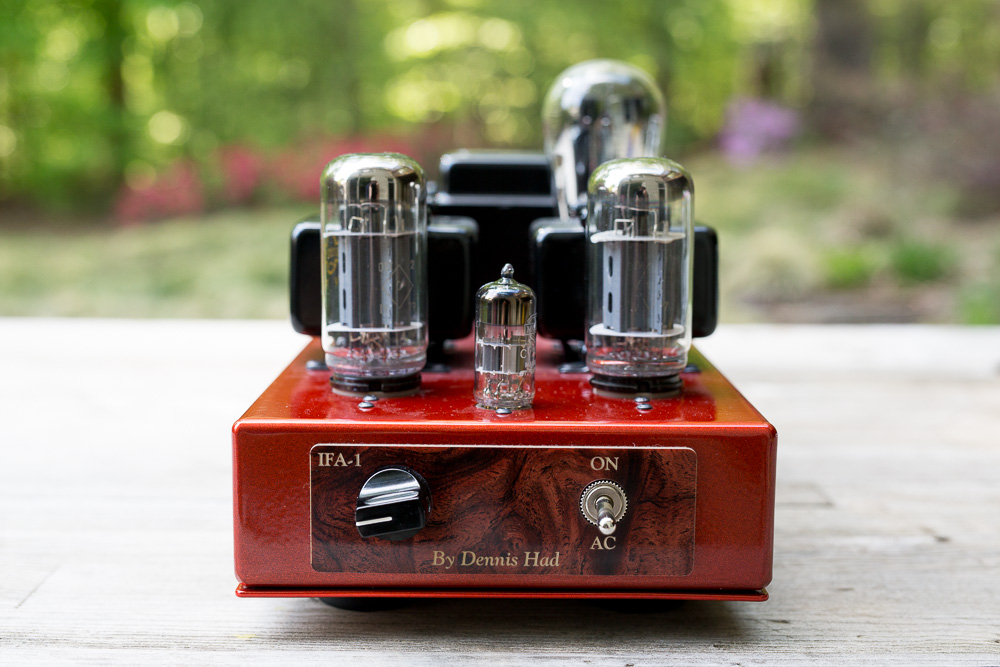
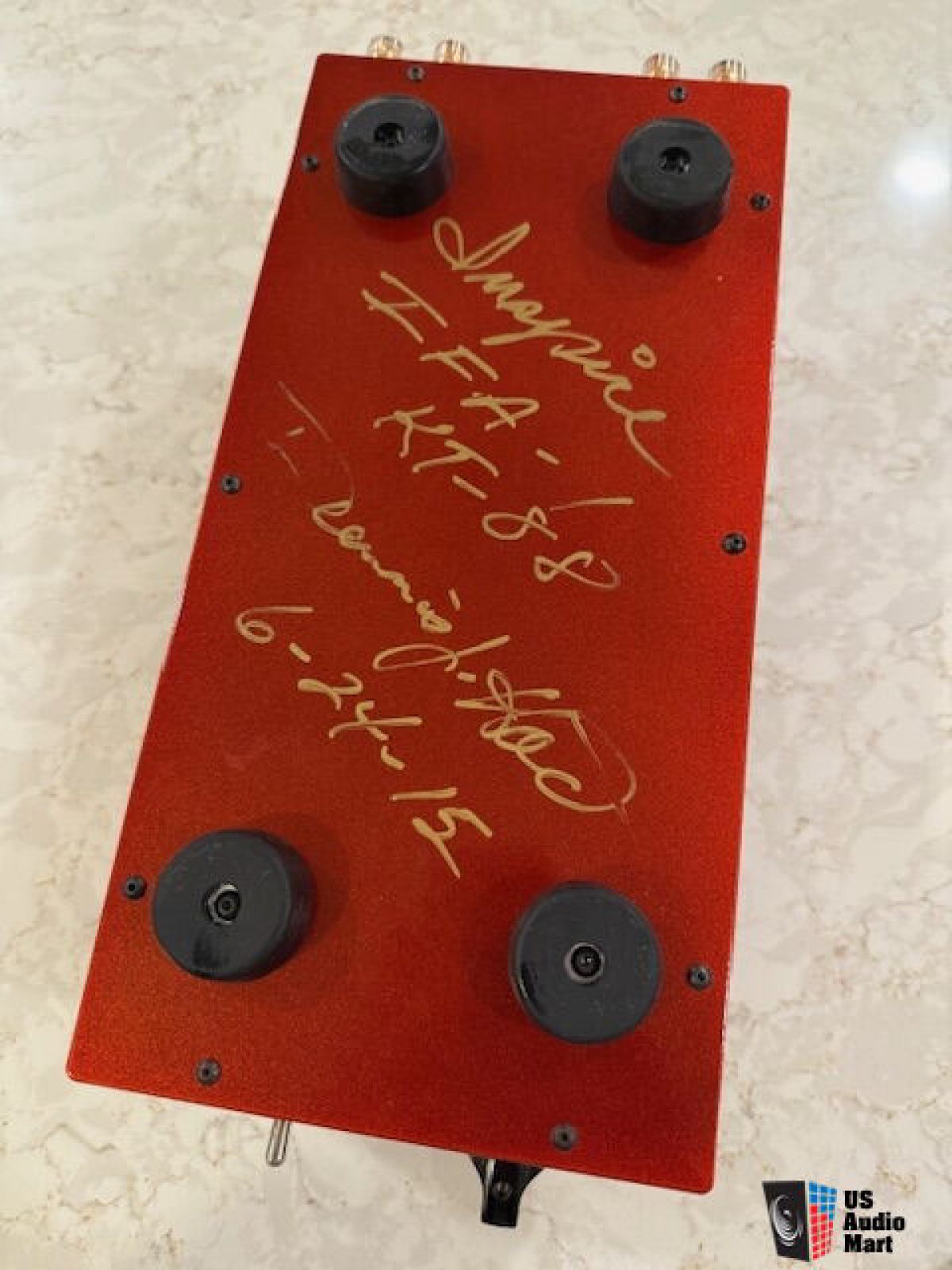
This week, I bought a single-ended KT88 integrated amplifier built by Dennis Had under his Inspire Fidelity imprint that I just happened upon in a weekly flyer from US Audio Mart. Glow in the Dark Audio has a solid review and even better photos. It’s low-powered, handcrafted, unapologetically minimal, and built around the idea that fewer decisions inside the circuit allow for more meaningful decisions by the listener.
One of those decisions is tubes—plural.
What immediately distinguishes this amp from the imagined 300B path is not compromise but latitude. This Inspire is designed to accommodate a wide range of output, driver, and rectifier tubes:
- Power tubes: EL34, 6550, 6L6, KT66, KT77, KT88, KT120
- Driver / input tubes: 6922, 6DJ8, 6N1P, 6CG7
- Rectifiers: 80, 280, 5Z3 (with adapter), 5AR4, 5U4, 274B
That flexibility is not necesssarily a feature checklist, but more of a philosophy. Where a 300B SET commits you to a single tonal identity, this amp invites exploration. Not endless rolling for its own sake, but careful listening to how small changes in materials and voicing shift presence, density, and flow.
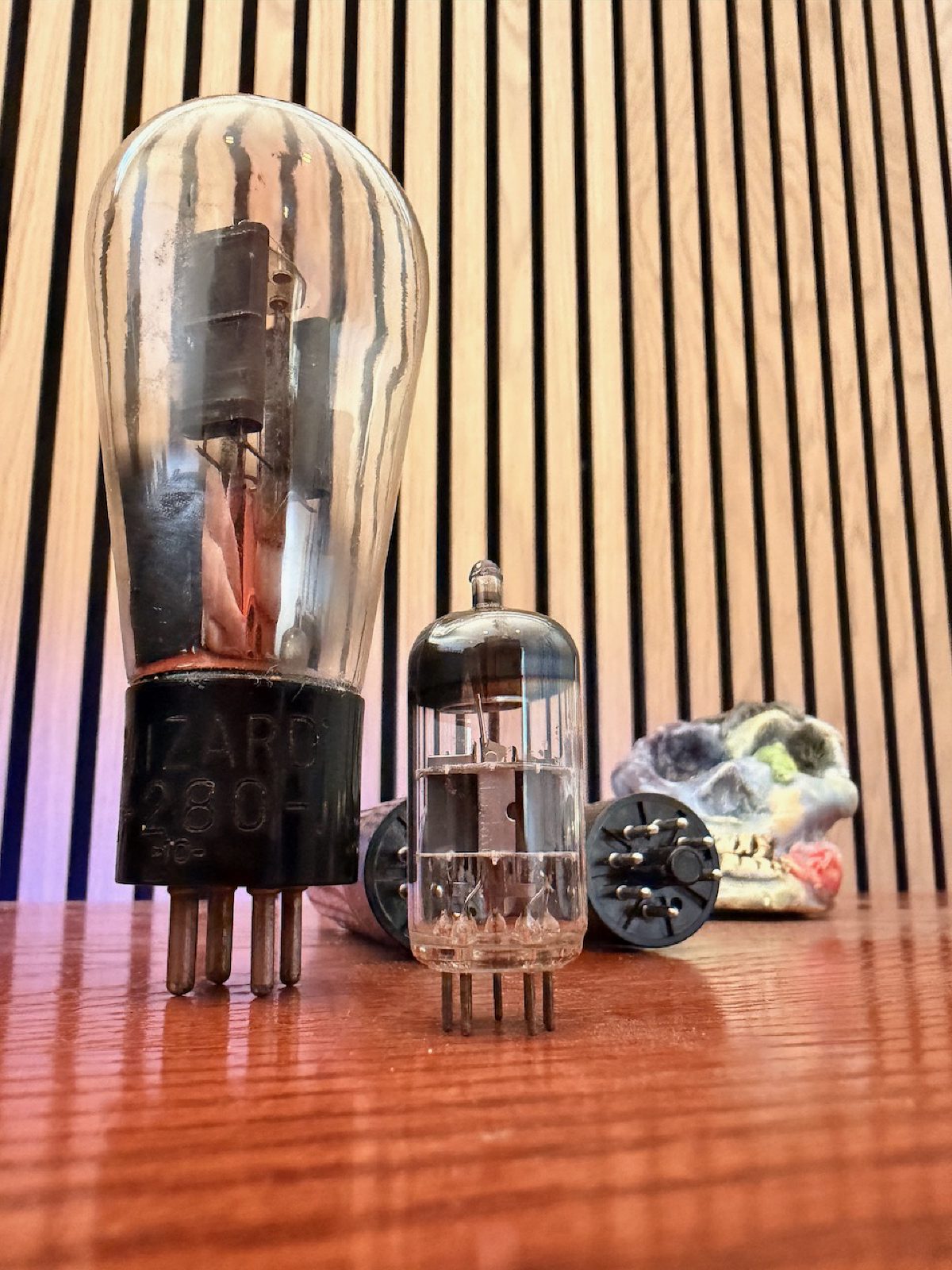
The tubes included with the amp reinforce that idea of plurality over dogma:
- 2 × 6550 metal-base tubes from NessTone
- 2 × JJ blue-glass EL34L
- Vintage Wizard globe 280 rectifier
- Vintage Raytheon 80 rectifier
- JAN military-grade Sylvania 6DJ8
- Amperex Holland-made 6DJ8
That’s not a starter kit, but a 100-year conversation. Pretty astounding.
Different rectifiers will change the amp’s sense of pace and elasticity. Different drivers will shape texture and focus. Different output tubes will recalibrate weight, tone, and authority. This is an amplifier that treats voicing as something discovered rather than fixed.
The amp came from John S., an audiophile in Chapel Hill who lives practically up the road from Dennis Had’s workshop. He’s spent years collecting and comparing single-ended amps, focusing on handcrafted, American-made designs. He shared that he’s never actually met Had in person, though they’ve spoken on the phone many times—an almost perfect metaphor for this corner of audio: deeply personal, lightly mediated, unconcerned with scale.
John also pointed me to a short interview with Had from the early days of Cary Audio, published in Stereophile, where Had lays out a philosophy that still feels current: single-ended designs are not about nostalgia or romance, but about removing corrective layers that stand between signal and listener. Less fixing, more listening. Why does this feel simpatico with what I’ve heard from Paul McGowen at PS Audio?
In my own system, I see this amp as a new lens rather than a replacement. The Audio Research I/50 gives me architecture: space, darkness, proportion, and disciplined neutrality. The Inspire will almost certainly do something else—collapse distance, thicken presence, and prioritize immediacy over scale. Less hall, more body. Less organization, more incarnation.
Paired with my DeVore Fidelity O/96 speakers, this feels like the experiment those speakers were always waiting for. Efficient, benign, and tonally grounded. I expect lower listening levels, more attention to phrasing, and a shift away from spectacle toward intent. Indeed, maybe this is a good way to characterize these two appraoches to audio: spectacle is what those systems Evolution Home Theater sells. They are sweet, but big and pricy.
This isn’t the 300B SET I once imagined. But it may be something better suited to where I am now: an amplifier that values choice over canon, listening over ideology, and trust over persuasion.
The tracking number just arrived. That feels better than anything I got for Christmas.
One detail I keep returning to is the rectifier situation—because it reframes the entire purchase. Included with the amp are two globe and early ST-style 80 rectifier tubes, and they are not merely “vintage” in the casual audiophile sense. The Wizard globe 80 dates from roughly 1927 to the mid-1930s. That makes it more than ninety years old. The Raytheon 80, in the later ST envelope, likely falls somewhere between the mid-1930s and early 1950s—still, conservatively, sixty-five to ninety years old.
That means the power supply for this amplifier can quite literally be shaped by components manufactured between the two World Wars.
There’s something quietly profound about that. These tubes were made when recorded sound itself was still finding its footing; when amplification was a necessity rather than a luxury; and when electrical engineering had not yet learned to apologize for simplicity. Their presence here doesn’t feel nostalgic or precious, but continuous, like a modern poet’s voice being added to the Western Canon.
John also noted the practical realities of using early four-pin tubes: the larger guide pins, the lighter grip of the sockets, the gentle twist to seat them securely. These are not inconveniences, but reminders that you don’t just plug this amp in—you handle it. You participate. I like that. It feels like my Leica M8.
That tactile engagement mirrors the design philosophy behind the amp itself. Nothing here is abstracted away. Nothing is automated or smoothed over. Even the act of inserting a tube carries intention.
In a system that already includes a modern, rigorously engineered amplifier like the Audio Research I/50, this feels like a meaningful counterpoint. One amplifier trusts through precision and control. The other trusts through continuity—through materials and practices that have survived because they worked.
There’s something grounding about knowing that when music flows through this amp, it may be shaped—however subtly—by a rectifier built before amplified music became ubiquitous. Not as an affectation, but as a working part. It’ll fun to play with this aspect of the amp, too; I remember being intrigued about the beautiful Sophia blue rectifier. Now, I can try one, if I want.
It’s hard not to feel that this adds another layer to what I’m listening for now: not just presence, not just tone, but time itself, still doing its job. A short time will see the Dennis Had Inspire SET IFA-1 added to my equipment list. Thanks, John.