By the time Red Clay entered the listening room, something has already changed. Winter has deepened, the system has been adjusted and readjusted, and the ear is no longer anchored to hard bop as a stable home base. This record doesn’t arrive politely. It doesn’t even quite begin. It bursts in, as if Rudy Van Gelder hit “record” a moment too early and decided to keep what happened next. The opening crash might suggest chaos, but it’s a thesis. This is not your usual album—at least from this playlist.
Historically, Red Clay sits in a complicated place, but sonically it feels unmistakable: a bridge out of hard bop. Not a clean break, not yet fusion, but a moment where the ground loosens. You can hear funk and soul beginning to seep into the jazz bloodstream. The rhythms are heavier. The textures thicker. The harmonies less polite.
And yes, that’s an electric bass you’re hearing. Or at least, not always an acoustic one. The bottom end is different here. More anchored. Less walking, more pulling. It changes how everything above it behaves.
This isn’t the crystalline precision of Blue Train. It’s earthier. Stickier. The music doesn’t glide so much as grip. There’s that clay in the title.
Freddie Hubbard is doing something different here. He’s not Lee Morgan—brilliant, precise, gleaming. He’s not Miles Davis either, with that cool, ironic restraint. Hubbard is physical. His trumpet playing is vocal in the literal sense: grunts, squeals, squawks, notes bent until they almost break. He lands between pitches and lives there for a moment, drawing the tension out. His trumpet talks and complains like a Karen.
On “Red Clay,” Hubbard glides rather than struts, but he’s never detached. His solos have weight. They feel embodied. When he pushes, he pushes hard. When he holds back, it’s coiled energy, not distance.
And that squeaky, almost laughing sound he makes with the horn—less a note than a noise—isn’t accidental. In the live version of “Red Clay,” he goes even further, practically making a frat-boy sound through the trumpet. It’s ridiculous. It’s joyful. It’s human. It tells you exactly where Hubbard is coming from: jazz as something you do with your body, not just your mind.
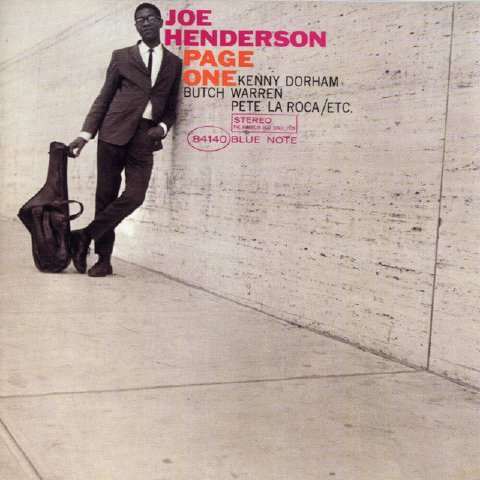
By now it’s impossible not to notice: this has quietly become Joe Henderson’s playlist.
He’s here again, and once again he does what he does best. He supports and stabilizes. He lets others shine. Henderson is integral without insisting on being central. On Red Clay, he sometimes feels underused—especially given how electric and unsettled the music can become—but that restraint is part of his role.
Henderson is the line that keeps the music from tearing itself apart. He enters later than you’d expect, often off to the side of the soundstage, grounding the moment without dominating it. In a record full of transition, he’s continuity.
If Red Clay feels like a bridge, Herbie Hancock is the engineer who knows exactly where it leads.
Hancock is everywhere on this album. Piano. Organ. Texture. Direction. On “Red Clay,” his solo is fluid and searching, already hinting at the pre-fusion vocabulary he’ll soon make unavoidable. On “Delphia,” his use of organ is revelatory: warm, supportive, and quietly transformative. The organ doesn’t dominate, but it changes the air around Hubbard’s trumpet—I might catch a bit of Jimmy Smith’s influence in his playing.
“Delphia” is almost a courtship ritual. The song begins nearly motionless, then slowly learns how to dance. Hubbard leads most of the movement, but Hancock defines the floor. When the organ solo arrives, it feels less like a break and more like a widening of the room.
This is Hancock doing what he has always done best: bridging jazz and the broader musical world without announcing the move: he’s just doing his thing.
“Suite Sue” introduces another trick: passages where the tempo feels like it’s accelerating, even though it isn’t. The band simply starts playing more. More notes. More density. The illusion of speed is created by intensity, not by time. Lenny White’s ride cymbal sounds particularly good here, shimmering and alive. But then there’s the soundstage quirk that keeps pulling me out: the drum kit is firmly stage-right, classic Van Gelder placement—but the bass drum feels centered. It’s disorienting, especially during the drum solo.
Is this a flaw? Or is it Van Gelder asserting control over how power is distributed in the mix?
I’m increasingly skeptical of the easy critiques of RVG—that he “didn’t know how to mic a piano,” or that his sound is somehow primitive. That argument doesn’t hold up here. What I’m hearing instead is a strong aesthetic choice, one that sometimes clashes with modern listening expectations but remains unmistakably his. I guess you either live with RVG’s quirks, or you avoid them all together. I have learned to appreciate what Van Gelder has brought to the art and science of audio engineering. I remain a fan.
Then there’s “Cold Turkey.”
If the album’s opening burst is a thesis, this track is the argument pushed to its limit. The tune settles into a groove that feels unmistakably late-1960s. The melody is simple. Almost blunt. Hubbard and Henderson play it in unison, but there’s tension baked in—dissonance that never fully resolves.
Hubbard’s solo here is nasty. Growling. Shouting. Squealing. He is not holding back, and at times it feels almost painful to listen to. That discomfort feels intentional. The title invites interpretation: withdrawal, compulsion, confession. Whether or not it’s autobiographical, the solo sounds like a body in distress.
When Henderson enters, he occupies the same mental space Hubbard just vacated—less violent, perhaps, but no less intense. The song breathes, breaks, and then reassembles itself. The electric bass confirms itself fully here, locking the groove down for good. As a closer, “Cold Turkey” is devastating. It may be the best track on the album. It certainly leaves an impression, like you just went through something life-changng. What a great song.
The alternate live version of “Red Clay” functions perfectly as a coda. With George Benson added on guitar and Stanley Turrentine on sax, the tune opens up and stretches. Benson’s solo alone suggests what the studio version deliberately avoided.
This live take makes something clear: the studio Red Clay was restrained on purpose. What you’re hearing on the album is not excess. It’s control applied to new materials. The restraint gives the music its tension.
Red Clay doesn’t abandon hard bop so much as loosen its grip. The grooves are heavier. The expressions rougher. The emotions closer to the surface. This is jazz preparing to leave the club and step into a larger, messier world.
If Kind of Blue clarified why space matters, Red Clay shows what happens when space fills with electricity. The ground hasn’t given way yet. But you can feel it starting to shift.
A Note about Tubes
I’ve been using the combination of my Sophia EL-34 and my Westinghouse-labeled Tungsram 7308 since I received them about a week ago. In general, this combination really highights the edges, making the dark space around the musicians even darker.
The Tungsram 7308 paired with the Sophia EL34s gave Red Clay a kind of exposed brilliance—exciting, vivid, but occasionally sharp at the edges. On a record already flirting with volatility, that combination occasionally made those edges a bit too sharp. Hubbard’s squeals, Hancock’s bite, the attack of the organ and electric bass all came forward aggressively. At times, it felt like the system was leaning into the album’s tension rather than framing it.
Swapping in the Sylvania JAN 6922—a new tube I just received from the previous owner of the Dennis Had Inspire—changed the feeling. The presentation became rounder, more forgiving, without losing detail. The edge softened just enough to let the music breathe. Hubbard’s grunts sounded intentional rather than abrasive. Hancock’s organ gained body. The groove settled.
What this reinforced, more than anything, is that tubes don’t just affect tone—they affect ethics. They decide how much friction you hear, how close discomfort sits to expression. On a transitional record like Red Clay, that choice is significant. The Sylvania didn’t tame the music; it clarified it.
Now that I have a selection of tubes to play with, I’m going to do just that: be intentional with what tubes to choose when listening to certain types of music or artists.