Donald Fagen has always been one of those artists who can make a four-minute pop song feel like it carries the dust of whole civilizations. He’ll give you a groove, a synth pad, a breathy harmony stack—and suddenly you’re weightless, peering out of some starship window at an uncanny mix of the ancient and the ultramodern. “True Companion,” written for the 1981 animated film Heavy Metal, is exactly that mode: a song that pretends to be science fiction but is really about something older, tenderer, and much stranger.
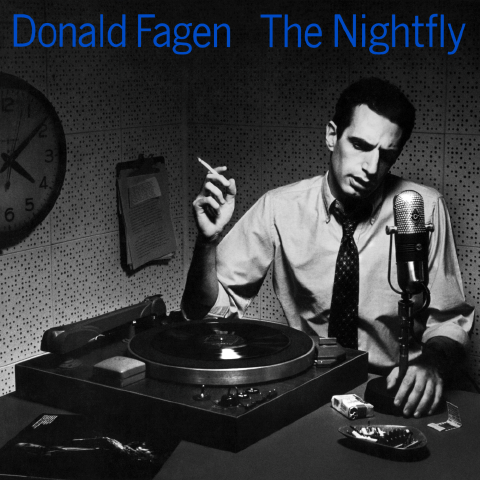
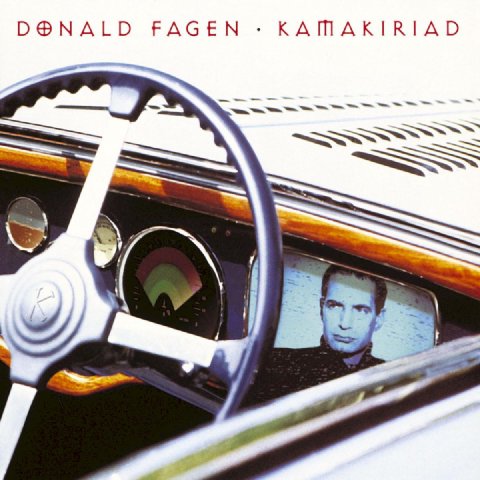
On the surface, sure, this is a space-ballad. The melody floats with that early-’80s synth shimmer, the percussion feels suspended in amber, and the whole thing hums with a lonely, galactic melancholy. It seems to me to presage both The Nightfly and Kamakiriad with its science-fictional themes. But zoom in on the lyrics, and the tune starts to resemble a lost episode from the Odyssey, translated into cold-war futurism. The narrator speaks like a weary mariner drifting home after a war he barely remembers, his crew exhausted, his sense of “home” thinning into abstraction. Everlasting twilight. Sad abstraction. Troubled skyways. These phrases could sit comfortably next to the passages in Odyssey 5 or 12 where Odysseus drifts at sea, dreaming of Ithaca even while doubting it still exists. The song feels like a captain’s interior monologue—Odyssean, yes, but also lonely in a distinctly modern way, tinged with science-fiction imagery that both romanticizes and distances the classical echoes. 
And it’s worth remembering that Fagen and Becker were Homer guys. “Home at Last” on Aja set the bar: a sly, jazz-funk riff on the wandering hero. “True Companion,” though, strips away the irony and keeps the pathos. This narrator isn’t the swaggering trickster. He’s a tired voyager who knows that returning home doesn’t guarantee belonging. He’s contemplating everything he’s lost across “space time”: it’s both literal and metaphorical distance, an impossible span between youth and age, past and present, desire and memory.
The Zeitgeist: 1981 as a Year of Cosmic Melancholy
When Fagen wrote this track, the mood in American culture was pivoting. The utopian glimmer of the 1970s sci-fi boom had dimmed. Reagan’s first year brought a renewed militarism but also a kind of existential hangover—détente dissolving, nuclear fears rising again, NASA’s promises stalled. Heavy Metal itself is a perfect artifact of that moment: a mash-up of futurist fantasy, adolescent wish-fulfillment, and technocratic dread.
“True Companion” enters that cultural air as a counterstatement—not bombastic, not heroic, but elegiac. It sounds like the morning after the big, neon dream: that moment when you realize the future came and went, and now everyone’s quietly nursing the consequences. The arrangement, built around synth textures and layered, ghostly harmonies, feels like music composed inside a machine still cooling down from interstellar flight.
Fagen’s musicians, as usual, were pros with jazz instincts and pop precision. Though the soundtrack doesn’t read like a classic Steely Dan personnel list, the spirit of those meticulous sessions—razor-edged intonation, surgically clean production—hovers over the track. You can hear echoes of the Gaucho aesthetic: lush but fatigued, tight but emotionally frayed.
The “True Companion” Itself: Ship, Ghost, God?
The song provokes odd readings, like who is the narrator? Some diety? The aoidos performing? The voice is too embodied, too weary, too drenched in mortal nostalgia to be the former. And the polyphonic vocals seem less like omniscience and more like the fractured subjectivity of a captain who’s been too long alone with his thoughts, a kind of polymêtis in disrepair. The layered voices could suggest the multiple versions of the self one becomes on a long journey (just as Odysseus is a shapeshifter of identity), or even the internal debate of someone who has lived too long in liminal spaces. 
The “True Companion,” then, becomes less a literal spacecraft and more an existential partner: the vessel that knows you better than any human could, the thing that held you together through firestorms and starshine. Think of the Argo in Apollonius’ Argonautica, a ship that seems half alive, almost sentient; or the anthropomorphized vessels in modern sci-fi from Star Trek to The Expanse.
If we think in this direction, “True Companion” might be a love song not to a person but to a vocation—to the craft of survival, navigation, persistence. A love song to the very act of journeying.
What I Might Be Missing (Or Rather: What the Song Hides)
Upon further contemplation, a few additional angles emerge:
The song as mid-life reckoning. Fagen was in his early thirties, and Steely Dan had essentially collapsed by this point. There’s a personal exhaustion encoded here—the sense of closing a chapter, of looking back at youthful “fire and starshine” knowing it cannot be reclaimed. That autobiographical layer shadows the mythological one.
The Cold War as the new epic. In 1981, space wasn’t just metaphor; it was geopolitical theater. The narrator’s weariness mirrors the cultural fatigue of living decades under nuclear dread, always on the brink, always “just beyond the troubled skyways.”
A meditation on mortality. The song’s tone of weariness might sugget approaching death. Science fiction frequently functions as metaphor for the afterlife—passing beyond the skyways as crossing the Styx. Fagen’s twilight imagery, echoing that liminal gray that surfaces throughout Homer, pulls the song into a metaphysical register. 
A sly comment on nostalgia itself. “Home is just a sad abstraction” is an allusion to the Odyssey, but it’s also a critique of the very impulse to romanticize the past. Fagen is always wary of sentimentality. Here, he lets the sentiment in—but frames it as a kind of ghost, a pale memory you can’t quite trust.
In the End
“True Companion” is one of those songs that doesn’t fully reveal itself unless you sit with it. Today, listening again, listening now, it feels just as much a document of its era: early-’80s ennui dressed up as space travel, a quiet lament from a musician caught between worlds, a graceful nod to Homer delivered through synthesizers instead of lyres. And maybe that’s the point: every voyage is a remix of someone else’s old song. Even the True Companion can’t outrun that truth.