
I’ve been thinking a lot about why my system, over time, keeps drifting toward simplicity. Not simplicity as an aesthetic pose, and certainly not nostalgia for its own sake, but a kind of functional minimalism that keeps proving itself the longer I live with it. The answer, I think, has very little to do with sound in the abstract. It has everything to do with respect.
My reference speakers, the DeVore Fidelity O/96, have been essentially the same speaker for more than a decade. That isn’t an accident, and it isn’t stagnation. It’s confidence. John DeVore designed them with a clear idea of what matters: tone, scale, ease, and a relationship with low-power amplification that doesn’t require heroics. They don’t ask to be corrected or endlessly optimized. They ask to be used. To be trusted. (And to be gazed at because they are gorgeous.)
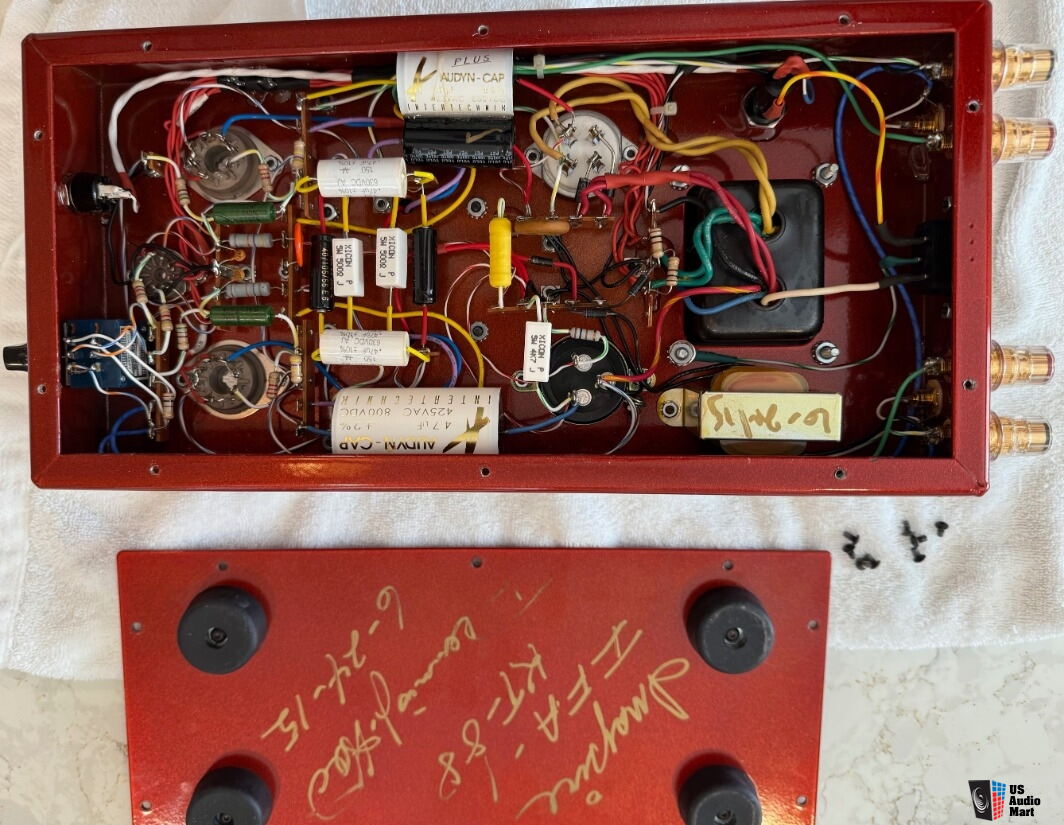
The same could be said for the Decware Zen, a design that has barely changed in thirty years, or for the Dennis Had Inspire IFA-1 that’s currently en route to my house. These aren’t products chasing novelty. They are statements that have already survived argument. Someone made hard choices so that the listener doesn’t have to drown in false ones.
That matters to me more than I realized.
I’ve never been comfortable with systems that confuse complexity with agency. The kind that market endless menus and feature sets as “customer choice,” when what they’re really offering is abdication. Options instead of intention. In audio, that sort of complexity rarely clarifies anything. It just inserts friction between cause and effect.
My Rogue Cronus Magnum amplifier is a good counterexample. It’s on its third iteration now, and that evolution makes sense to me because the center holds. The changes feel like refinement, not churn. The ethos remains legible. When companies iterate with clarity, I’m not opposed. When they iterate to justify motion, I’m out.
What I keep returning to, whether in gear or music or teaching, is what I’ve come to think of as a recognition of seriousness. I value it even when it fails. Especially when it fails honestly.
That’s probably why I’ve always been drawn to Norman Mailer. Not because he was the greatest stylist who ever lived, and certainly not because he was perfect. But because he took the work seriously. Language mattered. Ideas mattered. Truth was something you cut toward, like a razor, not something you curated for approval. He leaned forward, again and again, even when it cost him and that posture counts.
Listening, for me, works the same way. I don’t listen while I work. I don’t put music on as sonic wallpaper. If I’m tired or distracted, I’d rather turn the system off entirely than half-listen. (That time is for catching up on my YouTube stream.) Music deserves better than that. It deserves posture. Presence. Deliberation.
When I cue up something like Kind of Blue late at night, or The Sidewinder when I want to orient myself in familiar territory, I’m not looking to be soothed. I’m looking for clarity. I want the trumpet to sound like breath moving through metal, not like signal passing through a system. I want decay to feel earned. I want silence to remain intact between notes.
Single-ended triodes, when they’re right, don’t calm me. I’m rarely calm. Ask anyone who knows me. What it gives me instead is clarity. It shortens the distance between intention and outcome. It lets me lean forward without friction. It makes listening feel like an act of respect rather than consumption.
I think I learned this early, watching my father. He believed deeply in enthusiasm, not as hype, but as visible care. Showing up fully. Making attention contagious. That lesson stuck, and I see it now in my teaching, in the moments when a student wants to talk about a book after class, not for credit, but because something clicked. That lean-forward moment matters more than mastery of material ever will.
So when I find myself choosing minimalist audio, I don’t think I’m chasing purity or reenacting some golden age. I’m choosing tools that honor a contract: the artist took the risk, the designer did the work, and I, as the listener, will meet them halfway. Fully present. Deliberate. Engaged.
That’s where the music lives. Not in abundance, but in respect.