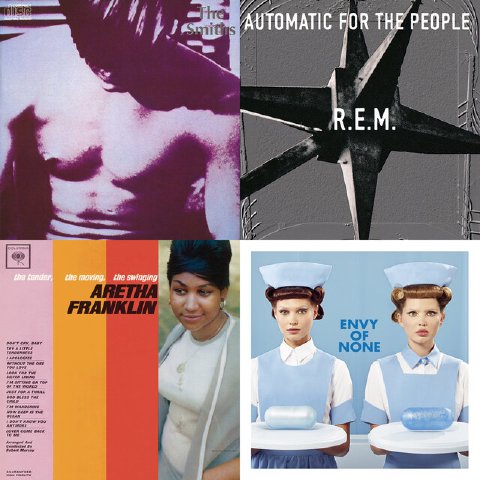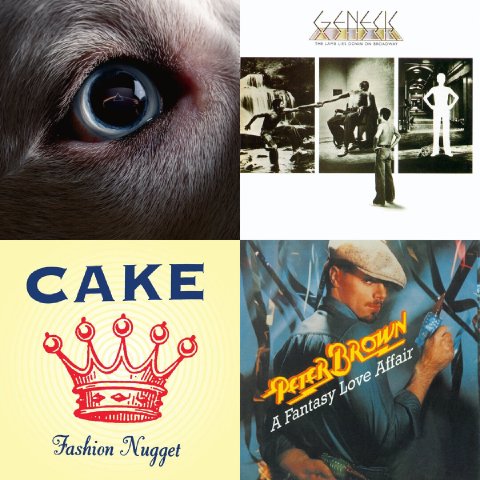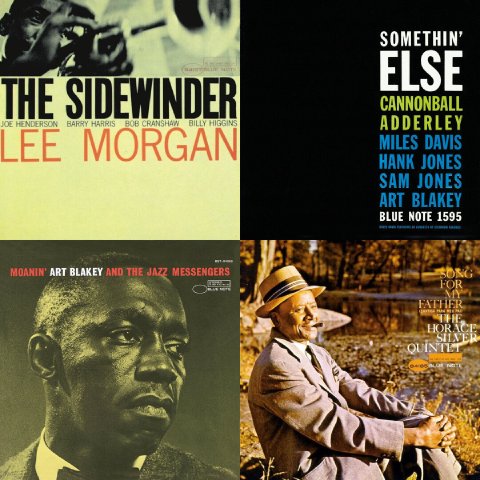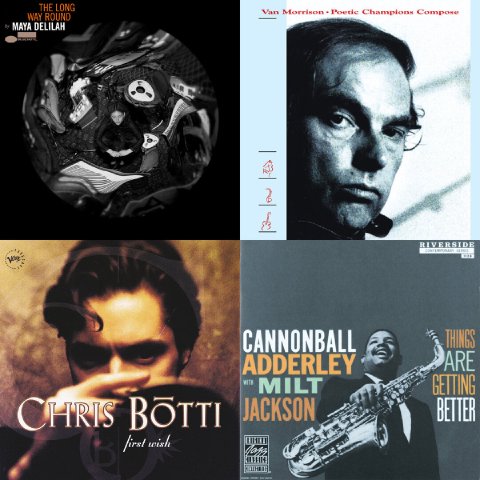
When your gear changes, your library changes with it. Not the files — the same ones are still there — but what you hear in them. Over the past few weeks, I’ve rotated through three different amplifiers (the Decware Zen SE84C+, the Dennis Had Inspire, and the just-arrived Alan Eaton 45 monoblocks), and each swap has sent me back to familiar albums looking for what’s new. The result has been one of the more interesting stretches of listening I can remember.
Here’s what’s been on.
Discoveries
Carsie Blanton was new to me until a podcast recommendation landed her on my queue, and now I can’t stop. The Red Album, Vol. 2 (2024) has a clever, retro-jazz vibe — the kind of music that would sound at home on a Fallout soundtrack, which I mean as a genuine compliment. “Another War” is a standout. That said, the engineering is inconsistent: “Azalea” from the earlier Not Old, Not New (2014) is much better-recorded, though oddly the vocalist isn’t centered — a trumpet sits in the middle of the image instead, which I can’t quite decide if it’s a choice or an accident. Either way, the songwriting wins out. I’ve also queued up Buck Up (2019) based on a recommendation and expect great things.
Yosi Horikawa is a genuine revelation. Roon tags him “electronic,” which is technically accurate and completely misleading. This is the opposite of electronic in spirit — he builds music from everyday percussive sounds recorded with such intensity that you hear them anew. The EP Wandering (2012) is the place to start. Put it on a good system and just listen to what he does with texture. It’s one of those records that makes you feel like your ears have been recalibrated.
Feverkin’s Calendar Project (2018) has been a go-to test record lately. Like Pino Paladino and Blake Mills’ work, it’s textural and excellently engineered — not quite lo-fi, not quite audiophile bait, but somehow both. It sounds brilliant through the Decware. The bass goes low and stays controlled. Worth seeking out if you haven’t.
Robert Ellis and The Lights from the Chemical Plant — particularly the title track — keeps pulling me back. Ellis has a bit of that Lyle Lovett quality: dry wit, unusual lyrical angles, and an album that’s engineered well enough to reward close listening.
Anouar Brahem’s The Astounding Eyes of Rita is minimal and spacious, textural and exotic. The oud and bass clarinet together create an atmosphere unlike anything else in my library. If you haven’t explored Brahem, this is a fine starting point.
Familiar Albums, Fresh Ears
Marian Hill’s “Differently” keeps stopping me cold. On the 45 monoblocks especially — more on those in a forthcoming review — the track landed with a weight I’d previously only associated with dealer demos on very expensive equipment. There’s a weird intimacy to that recording that rewards a system with good imaging.
Talking Heads — Speaking in Tongues (1983): better-engineered than I’d given it credit for. Lots going on — cool percussion over a quirky, minimal sound — and the system resolves it cleanly. Compared to Talking Heads: 77 (1977), which sounds noticeably flatter, this one is a small revelation. I’m now working through Byrne’s solo catalog, starting with Grown Backwards — an album I’m embarrassed to admit I hadn’t properly listened to before.
Peter Gabriel’s “What Lies Ahead” from his March relaease which will eventually be o/i has become something of a reference track for the Alan Eaton 45s. Tony Levin’s bass is what I keep going back to: the texture of his fingers on the strings, the resonant descent of each note. On the right system, you hear the instrument, not just the note.
Rickie Lee Jones is always reliable. The Devil You Know — all covers — is eccentric and wonderful. Her take on “Sympathy for the Devil” sounds almost possessed. And her “Show Biz Kids” cover from It’s Like This might be cooler than the Steely Dan original. Yeah, I said what I said.
The One That Didn’t Land
Suzanne Vega’s Solitude Standing came up as a reference recording recommendation, and I wanted it to work. “Tom’s Diner” a cappella sounded appropriately present and floaty. But “Luka” had that thin, treble-forward ’80s sheen that even a good system can’t entirely rescue. Not a keeper for the reference shelf.
Stevie Ray Vaughan deserves his own note. “Tin Pan Alley” from Couldn’t Stand the Weather (1984) sounded great — I just didn’t have the volume quite where it wanted to be. Next session, I’ll do it properly. And “Riviera Paradise” from In Step (1989) is overdue for a serious listen on this system. SRV at his most interior and moody — exactly the kind of track that rewards low-power SET amplification and a quiet room.
More on the amplifiers driving all of this soon.