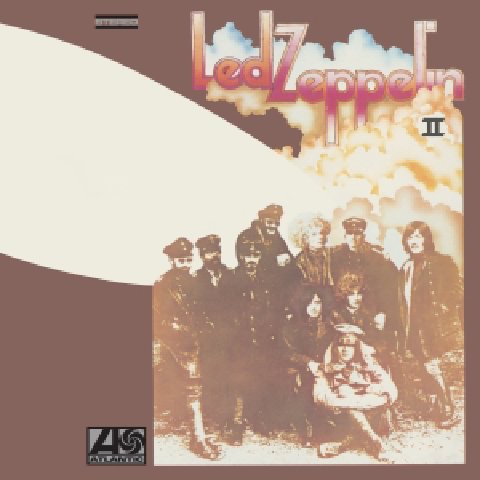
Houses of the Holy is one of those albums I always come back to with a mix of admiration and frustration. Admiration because it’s Zeppelin, man—rock gods mid-ascent, absolutely confident in their craft and unafraid to throw the whole musical pantry into the mix. Frustration because the production still isn’t quite there. Like Zeppelin II, the album has that muffled, “recorded-through-a-fleece-blanket” quality at times—especially when it comes to Bonzo’s drums. You’d think after redefining rock with IV, they’d figure out how to mic the damn kit.
But let’s not get ahead of ourselves.
This was 1973. Led Zeppelin was riding high—“Stairway” was already legendary, and they were starting to stretch out and experiment. They’d built their own studio (Page’s fancy new digs at Headley Grange and Jonesy’s at his house), giving them the freedom to tinker, layer, and go full mad scientist. And Houses of the Holy is what came out of that lab: a gloriously weird, genre-bending, often stunning set of songs that says, “Yeah, we can do more than just pummel you with riffs. Watch this.”
And we did watch. And listen.
Song by Song
The Song Remains the Same
Page overdubs himself into a guitar choir while Bonzo’s drums sound like they’re stuck behind a velvet curtain. Seriously, were they afraid of his power? Still, it’s an epic opener—frantic, melodic, and cosmic. Some kind of meta-commentary on touring, maybe? While the scenery shifts city to city, the song stays constant—an anchor in the chaos of the road. The album’s end, “The Ocean,” will echo this theme.
The Rain Song
Jonesy’s mellotron and Page’s delicate acoustic guitar (stage-left, if you’re listening) paint one of the most beautiful ballads in Zeppelin’s catalog. It’s seasonal, cyclical—“spring is here and so are you”—moving through time with grace and a touch of melancholy. It’s like a poem set to music, hinting at impermanence, maybe even death, but embracing it with maturity. Plant’s vocal performance here is chef’s kiss.
Over the Hills and Far Away
This one was the first single, and it’s easy to hear why. It’s got that classic Zeppelin light-and-shade: a bucolic acoustic intro tumbles into a rock midsection with Page’s lush twelve-string (sometimes muddied in the mix, but forgivable), and a killer solo. Hippie anthem? Road song? Whatever—it’s joyful, with a dash of wistfulness. And it’s one of their most enduring tracks.
The Crunge
Now we’re getting weird. Bonham gets a co-writing credit here, and it shows: the rhythm is all him. A funky, staggering groove in 9/8 with no bridge—and Plant lets you know it. “Where’s that confounded bridge?” It’s Zep doing James Brown by way of Monty Python. You either love it or skip it. Me? I kinda love it. It gives some promo-rap vibes.
Dancing Days
It feels like an acid-soaked summer night. A couple out for a good time, no consequences, no regrets. It avoids the usual macho posturing and just goes for a vibe—laid-back, rhythmic, hypnotic. Page’s guitar sounds like it’s doing a drunken sway, and I mean that as a compliment.
D’yer Mak’er
You either groan or grin. I grin. Intended as a mash-up of reggae and ’50s doo-wop, this one divided the band. Jonesy thought it was a studio joke. Bonzo’s drums are gigantic here—finally given room to breathe, even if they tower above the band. The title’s a dad joke: “My wife’s gone to the West Indies.” / “D’yer mak’er?” (Say “Jamaica” with a Cockney accent.) / “No, she wanted to go.” But the groove is infectious, the lyrics are goofy-fun, and Plant gets to yelp with abandon.
No Quarter
This is where the production finally gets it right. Everything feels deliberate. Jones owns this track with his eerie electric piano and synth textures. Page lays down that haunting, modal riff. Bonzo plays tastefully, restrained, right there in the room with you. Plant’s vocals are spectral, sliding through the mix like smoke. It’s a heavy, heady track that points toward the mythic epics of Physical Graffiti and Presence. And yeah, the title comes from Viking lore—“no quarter” meaning no mercy. It’s cold, otherworldly, and chilling in the best way.
The Ocean
What a closer. A straight-ahead rock tribute to their fans (“the ocean” of heads bobbing in front of the stage), but also a love letter to Plant’s daughter Carmen, tucked sweetly into the bridge. There’s even a doo-wop bit that seems to wink at the genre experiments earlier in the album. It’s celebratory, chaotic, self-aware. And Kip and I used to try and sing that a cappella break—probably off-key, but with full hearts and hearty laughter.
Coda
Houses of the Holy isn’t perfect. The production is maddeningly uneven (again, with Bonham criminally buried at times), and the album lacks the cohesion of IV. But maybe that’s the point. This is Zeppelin stretching, bending genres, getting playful and strange, sometimes silly, sometimes sublime.
It’s a groove album—more toe-tapping than head-banging. But within that groove lies a band maturing, breaking from their blues roots, and trying new stuff. Some of it works brilliantly (“The Rain Song,” “No Quarter,” “Over the Hills”), some of it wobbles (“The Crunge,” depending on your patience), but all of it feels alive. Unfiltered. Exploratory.
And that cover? Inspired by Childhood’s End—Arthur C. Clarke’s sci-fi vision of human transcendence. If you know the novel, it’s an unsettling parallel: humanity, in its final stage, shedding its skin and merging into a hive consciousness. The image of pale children climbing ancient ruins toward the sky is both innocent and alien, like the album itself. Mysterious. Evolving.
It’s not Zep II, or IV, or even Physi. But Houses earns its place in the Zeppelin canon. It shows what they could be when they weren’t just trying to be “Led Zeppelin.” And that’s worth hearing.
4.5 stars—docked half for the inconsistent production. But still… a hell of a house to visit. Amen.