
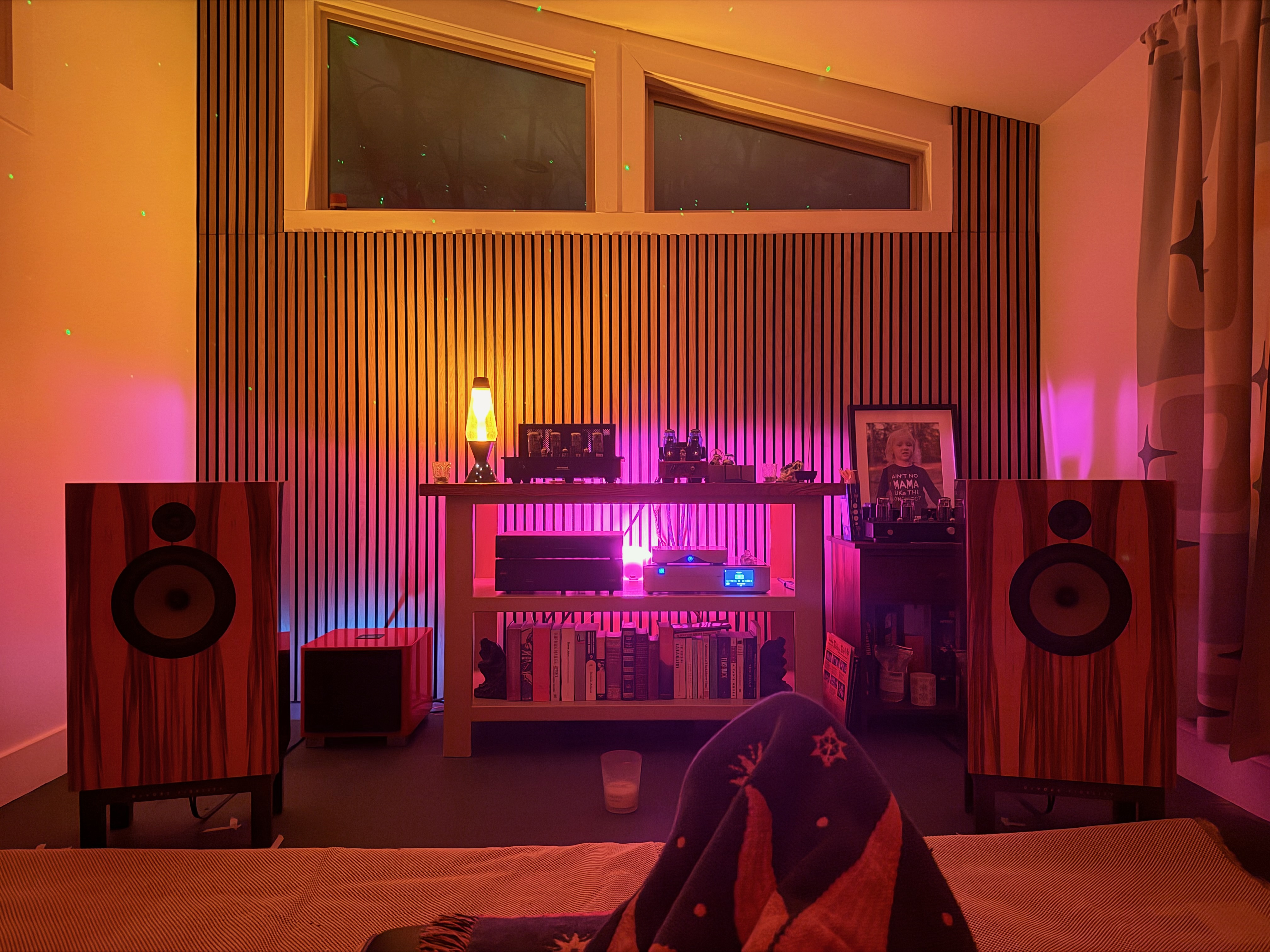
(or: How I Finally Got a Room of My Own)
Our house is not large. It is full of children, movement, noise, life. All of this is good, obviously. But after a decade without a serious audio system, I was beginning to feel like a listener without a room, which is to say not much of a listener at all.
I should also admit something up front: I am not a headphone guy. I’ve tried. I respect the craft. But listening, for me, has always been about loudspeakers in rooms and the way air moves between them. A great system needs space to work, and a room is not a neutral container, but an integral part of the system.
For years, my system had been boxed up, sold off, or compromised into submission by domestic reality. At some point, that compromise stopped feeling reasonable. I didn’t want louder music. I wanted a place where listening could happen deliberately again.
That was the moment when this stopped being a vague fantasy and became a project. And from the beginning, that project depended on Anderson Construction.
This is where I should say something about the coincidence that the owners of Anderson Construction are also my in-laws. It matters, but not in the way people usually imagine. What mattered here was not familiarity but trust. I knew how they worked. They knew how fastidious I could be. More importantly, they understood that this wasn’t just an addition, but a room with a particular purpose.
Autumn calls it the Studio. I played with atelier, but that’s too pretentious. I call it the Sound Shed. We were both right, though we didn’t know that yet.
Measuring the Yard (and Changing My Mind)
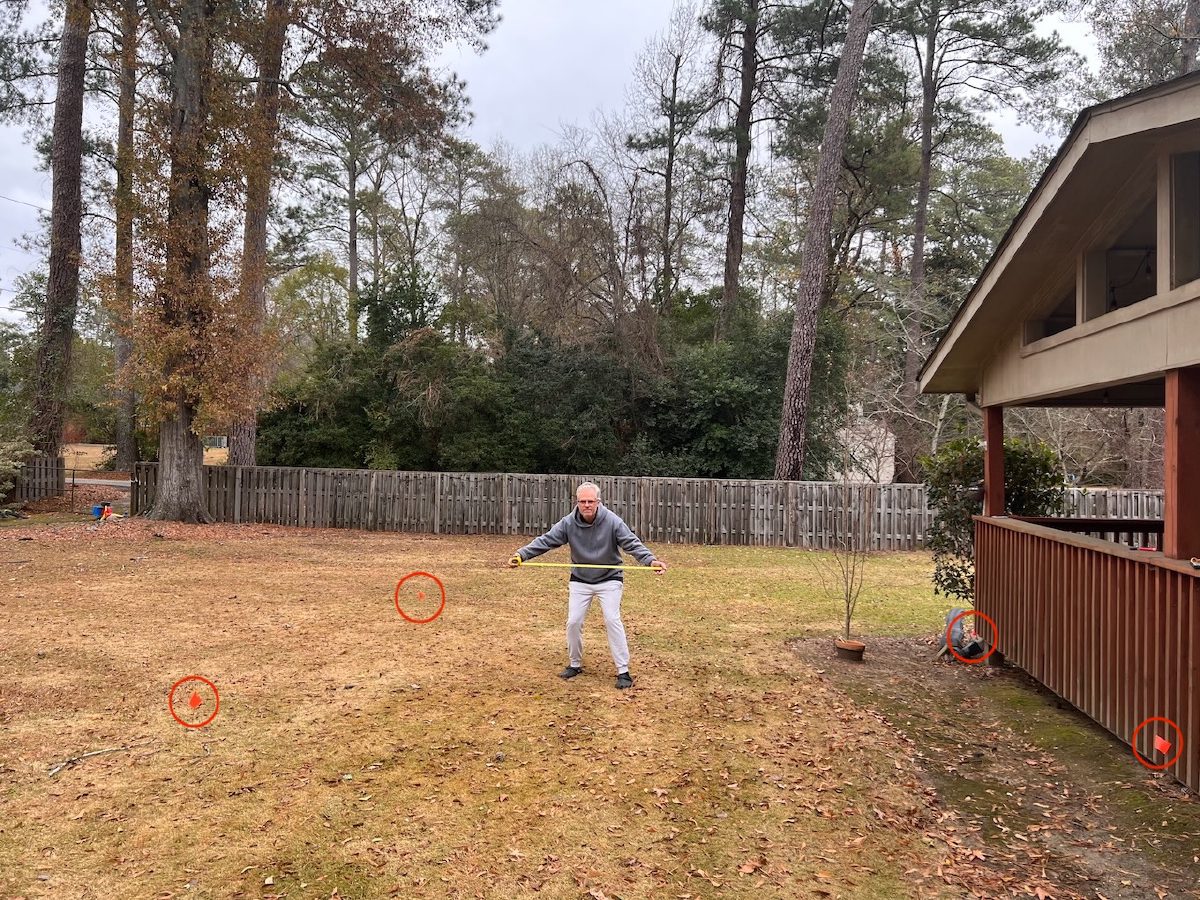
The first version of the Sound Shed was modest: eighteen by twelve feet. Sensible. Contained. Probably fine. Right?
I flagged the yard, waited for utility clearances, and did what any reasonable person would do: I carried a chair outside and sat where my listening position would be. That experiment lasted about five minutes. It wasn’t the speakers that felt constrained, but everything else. A desk. Shelving? A comfy listening chair. The ability to move without constantly thinking about what I might bump into.
So I measured again. Three more feet: twenty-one by twelve. That has a nice rig to it.
This is the point where good builders either sigh or ask questions. Robert asked questions.
He never treated the change as an inconvenience. He treated it as a correction. We talked through what the room needed to do, not what it needed to look like, and adjusted accordingly. That attitude set the tone for the rest of the build.
On the administrative side, Cheryl handled the steady rhythm of communication that makes projects like this survivable. Permits, timing, inspections, delays. When you are waiting for something to begin, clarity is crucial. Cheryl provided that without drama or spin—I was never left guessing. Things happened when they happened. When they didn’t, I knew why.
Ground was broken in March. The yard was chewed up. Progress was visible, and it finally felt real.
Reality Arrives (With Shovels)
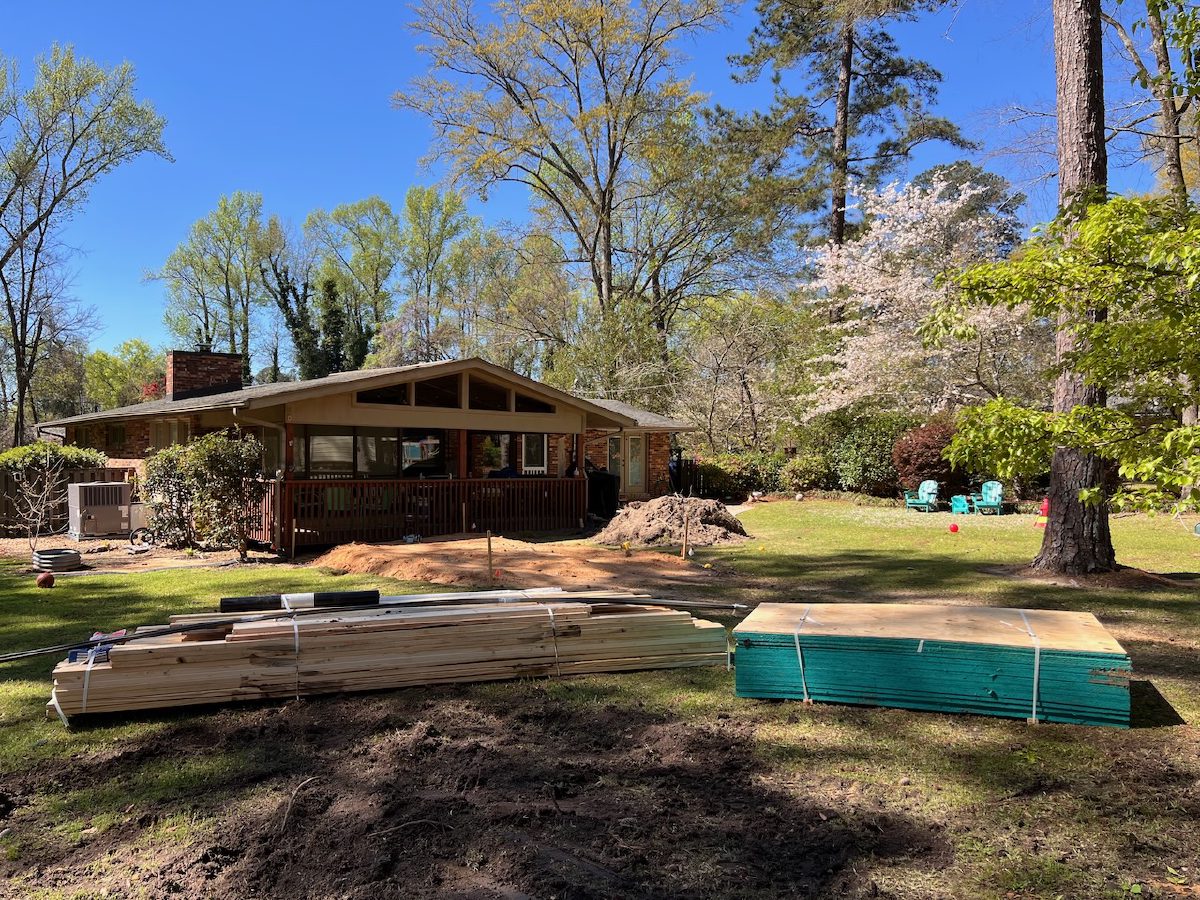
Construction rarely unfolds without friction. Ours was no exception.
The first inspection failed. The foundation wasn’t deep enough. This was not a philosophical disagreement; it was a man with a clipboard saying, “It’s gotta be deeper.” Robert was understandably annoyed, but not immobilized by it. That evening, he showed up with shovels. So did I.
We dug. It was after seven. I had already settled into the idea that the day was done. Apparently, the Sound Shed had other plans.
An hour later, we were finished. The next morning, we passed inspection.
That moment mattered more than I expected. Not because it saved time, though it did, but because it revealed how this project would be handled when something went wrong. No deflection. No resentment. Just work to make it right.
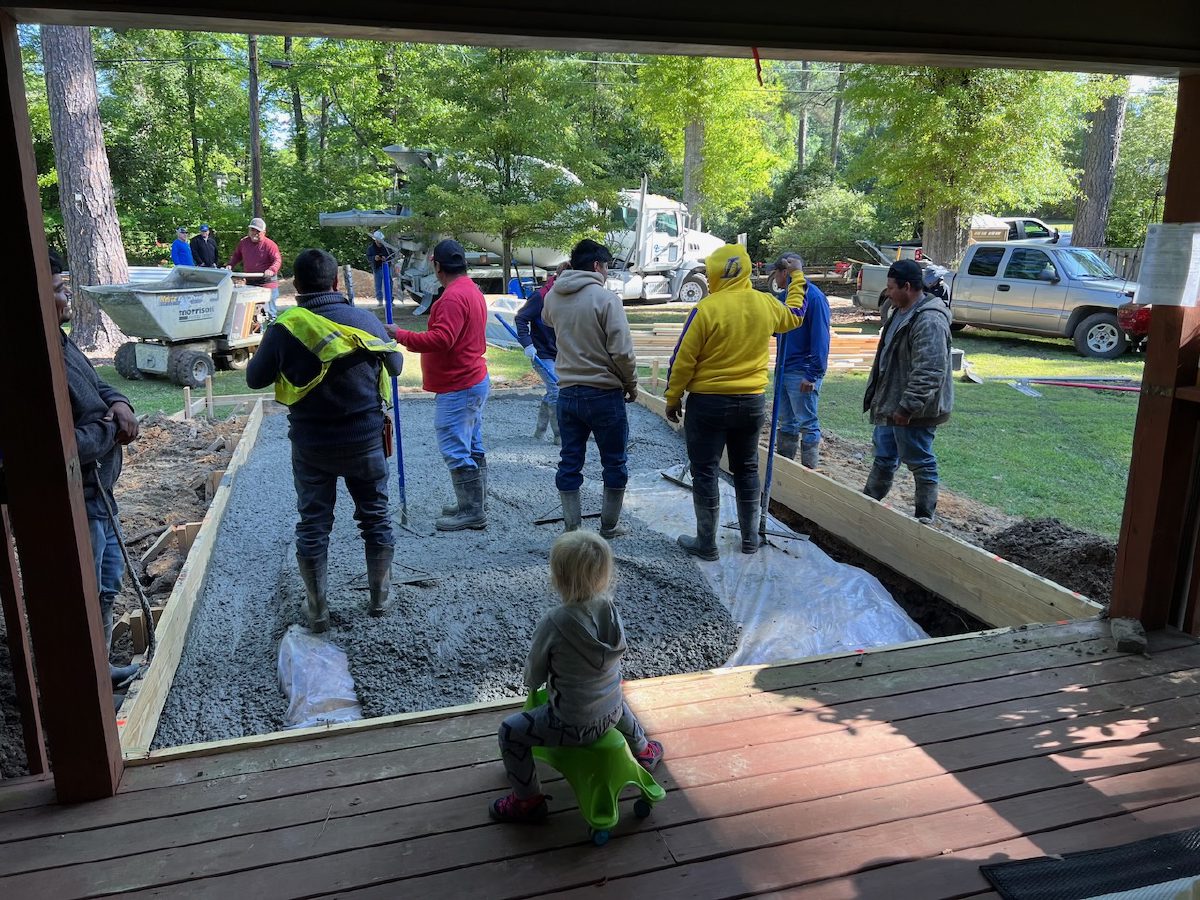
From there, things moved. Concrete day arrived early, with the kids watching from the deck. Framing followed quickly. Eight men showed up and each seemed to know exactly what he was there to do. By the end of the day, the room had a shape. Walls stood where flags had once been. The Sound Shed existed in more than name.
Framing the Room
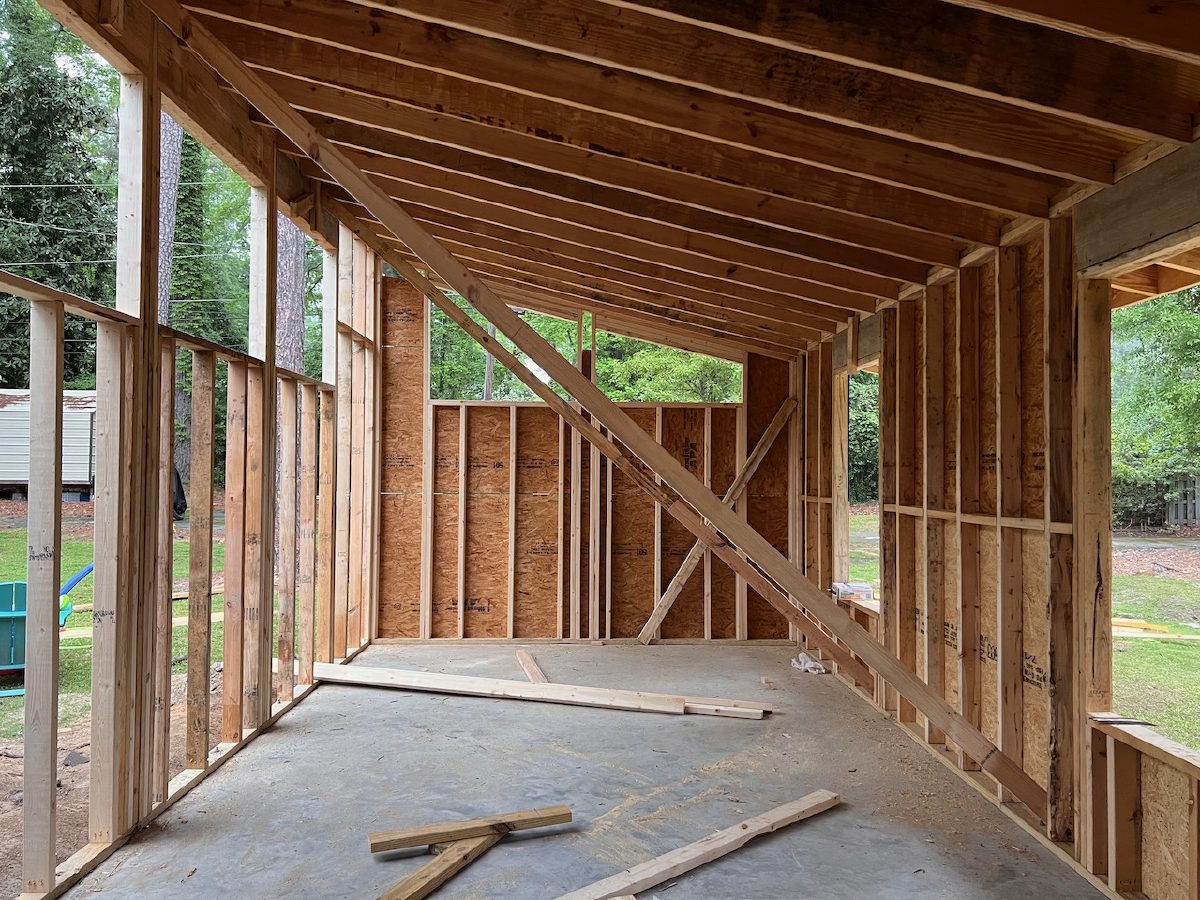
When the framing went up, this was the moment I’d been waiting for. Suddenly the Sound Shed wasn’t a rectangle in the yard or a set of measurements on paper. It had volume, proportion, and direction.
The crew worked with a speed that only comes from repetition and confidence. Studs went up. Rooflines took shape. By the end of the day, I could finally stand inside it and feel what twenty-one by twelve really meant.
From an audio perspective, one decision mattered more than any other at this stage: orientation. The north wall would be the front wall, the wall behind the system. Everything else flowed from that choice. Even before insulation or drywall, it was already clear what the final shape would be and where my attention would be focused.
Infrastructure, Quietly Done Right
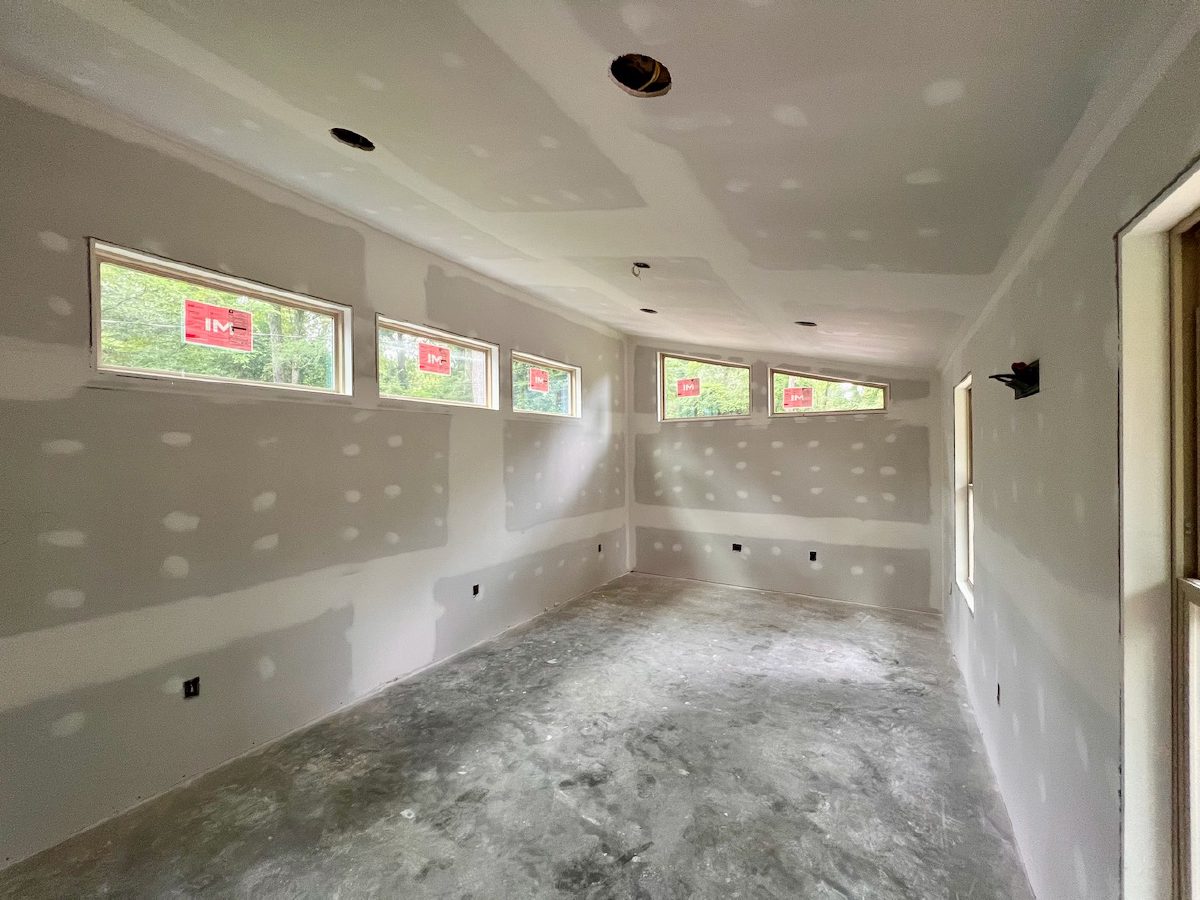
Once insulation went in, the character of the room changed immediately. Even unfinished, the echo dropped. The space began to behave.
This was also when the invisible decisions began to matter. A dedicated outlet on the center of the north wall, running straight from the electrical box. Network drops on the north and south walls. Nothing exotic, nothing ostentatious, just thoughtful placement based on how the room would actually be used.
What I appreciated most here was that none of this required justification. I explained what I wanted and why. Robert listened, nodded, and made it happen. Cheryl kept everything moving smoothly behind the scenes.
Drywall followed. Then brick on the exterior. Each step closed in the room a little more in the way that makes a space start to feel intentional.
Finishing Work and Shared Labor
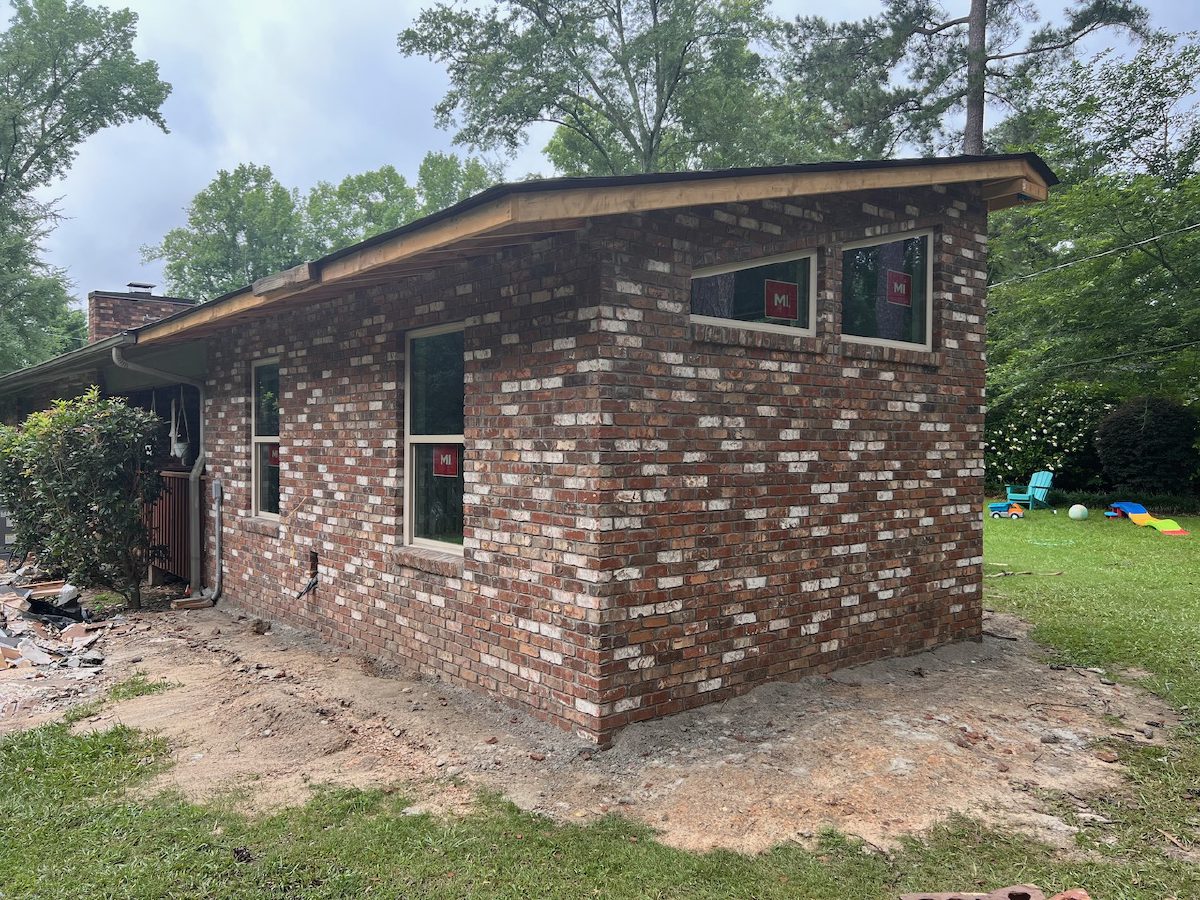
By the time we reached trim, brick, and deck work, the Sound Shed began feeling more like a place that needed finishing touches. This was also where I decided to get more directly involved, partly to save some money and partly because I wanted to understand the room by working on it.
Robert let me help, which is not the same thing as letting me get in the way. He cut. I nailed. I made a few mistakes, as amateurs do, but nothing catastrophic.
The brickwork deserves its own quiet acknowledgment. I watched the masons over several days, working through heat and rain with steady focus. The result looks effortless, which is usually a sign that it was anything but.
In case it wasn’t obvious: it was here that I felt truly glad I made the decision to work with Robert and Cheryl on this project. Not because everything went perfectly, but because when things didn’t, they were handled with competence and calm.
Tuning the Room
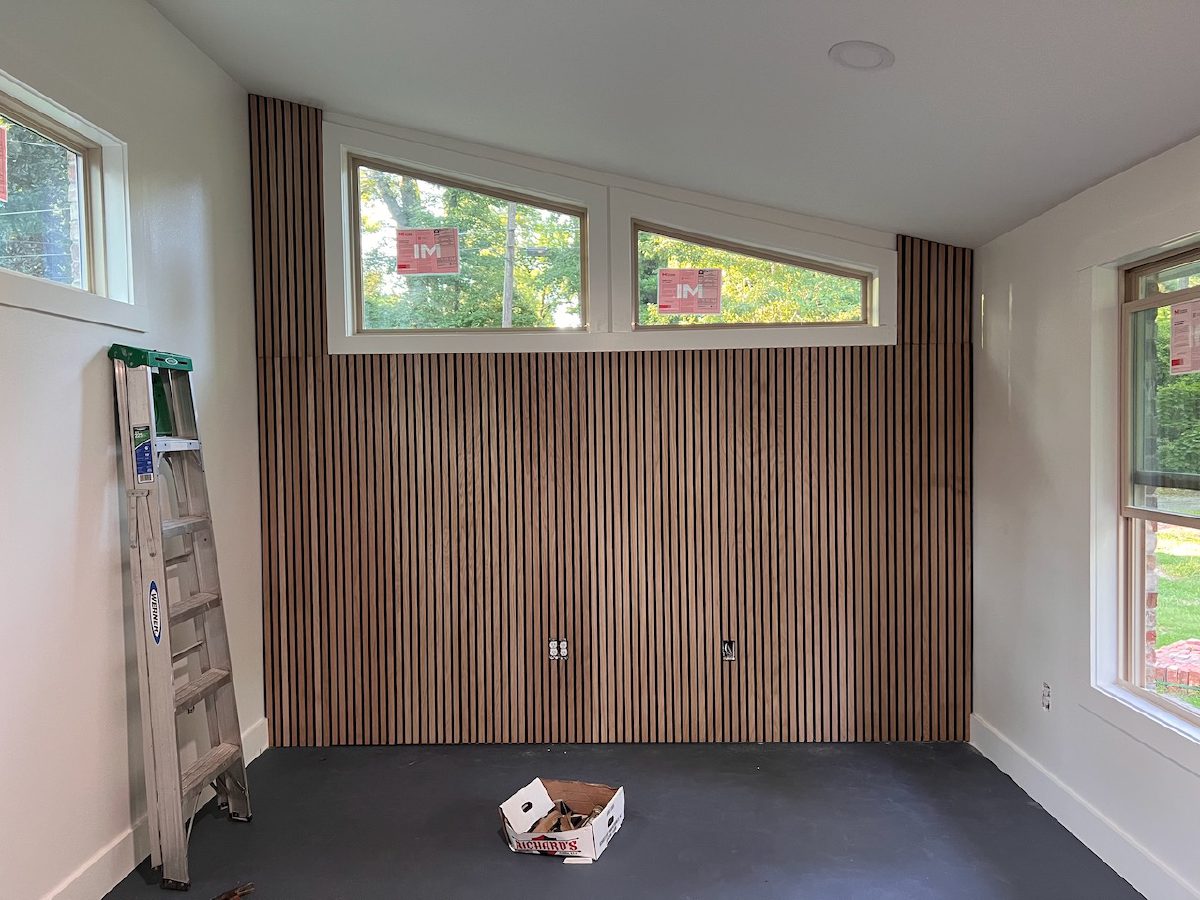
The first real tuning of the Sound Shed didn’t involve speakers at all. It started with surfaces.
When the acoustic panels went up on the north wall, the effect was obvious almost immediately. Clap your hands, speak a sentence, let the sound hang in the air. The room had already learned to listen.
The floor came next, followed by a thick rug and curtains. None of this felt like optimization in the anxious sense. It was furnishing, decorating. The room was no longer an empty container, but was becoming a bespoke environment where I could do what I do.
Moving In (Almost Listening)
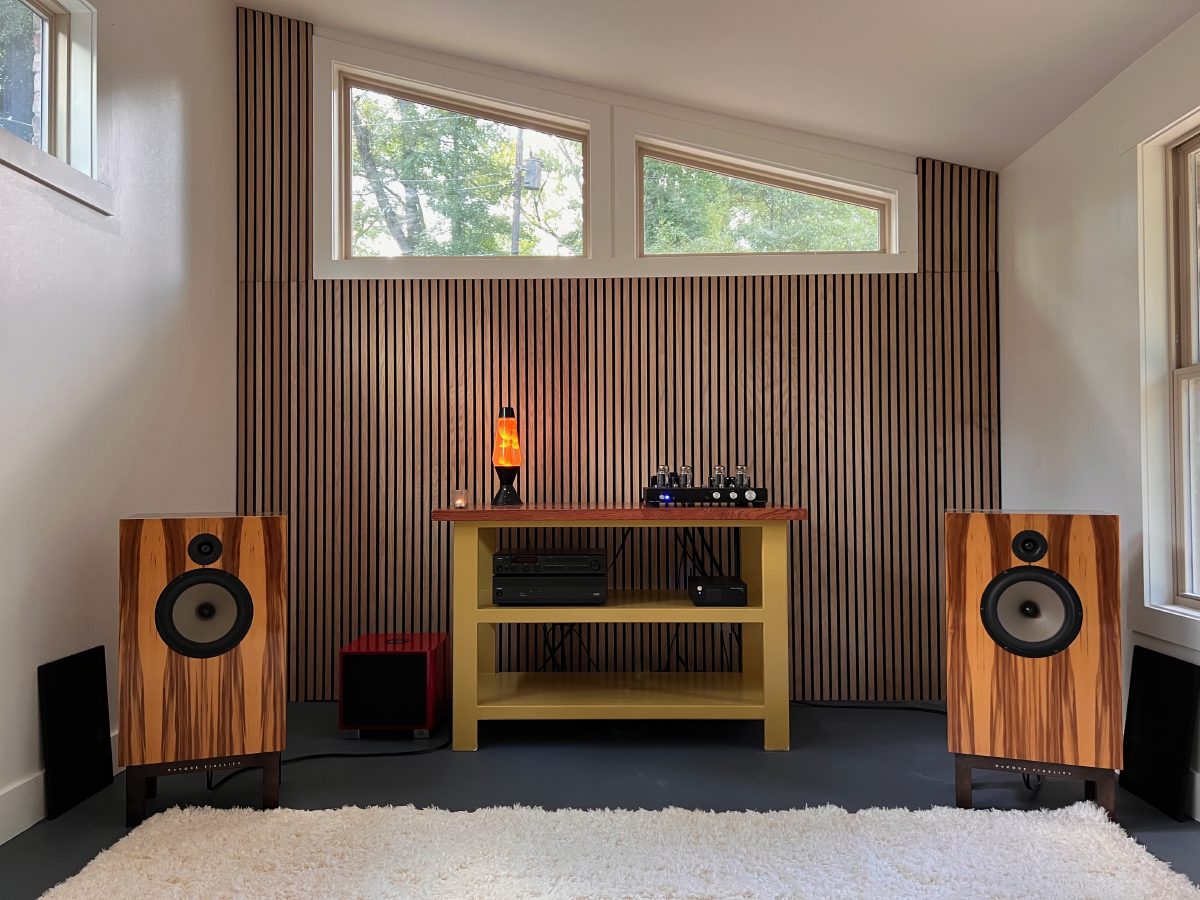
The system came in with help from Giles. Two cars, one trip, and less trouble than I expected. Within an hour, everything was connected and playing.
Speaker placement fell into place quickly. I don’t yet have a proper listening chair, so an old rocking chair stands in temporarily, doing honest work. Music played. It all sounded good. Not perfect, not finished, but promising.
This is where I stopped myself.
The real listening deserved its own moment. Audio Notes exists because this room exists, and it felt right to let that connection remain clean. I’d have my first session soon enough.
Studio, Sound Shed
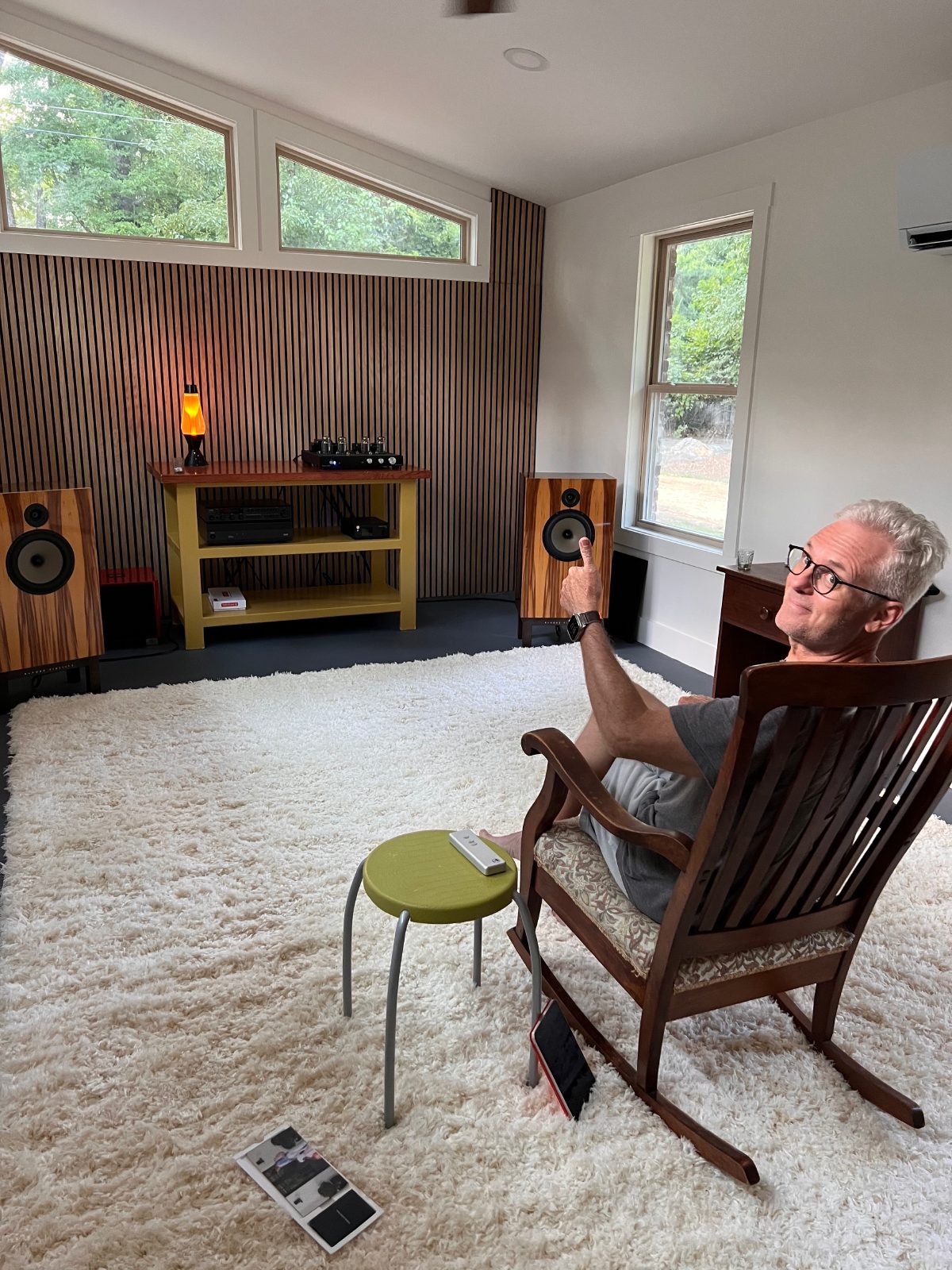
Autumn still calls it the Studio. I still call it the Sound Shed. Both names have stuck.
The Studio suggests intention, work, creation. The Sound Shed suggests retreat, focus, a small structure built for a specific pleasure. The room accommodates both ideas easily and I’m pretty damn happy about that. Stuff needs to find it final place, but that will come with continued use.
What matters more is that it exists at all, and that it was built by people who understood that a room like this is not just square footage. It’s a change in how you live with sound, with attention, with time.
Sound Shed: Practical Notes
- Room size: 21’ × 12'
- Orientation: North wall as front/system wall
- Electrical: Dedicated outlet on north wall, direct run from panel
- Networking: CAT6e runs with RJ45 terminations on north and south walls
- Acoustic treatment: Absorption panels, curtains, rug
- Builder: Anderson Construction (Robert and Cheryl Anderson)
- Timeline: Winter planning, spring build, summer move-in