I blame John.
My audio friend in North Carolina—the same guy who sold me the Dennis Had Inspire IFA-1 and loaned me the Decware Zen Triode—is a man of persuasive enthusiasms. He doesn’t sell; he just describes what he hears until you understand that you have no choice. His pitch for the Alan Eaton 45 monoblocks was characteristically direct: “I would buy another pair very quickly. He’s been making amps for a while now and he can’t go on forever. It concerns me he may stop building or his waitlist may get out of hand.”
Reader, I bought the amps. I’m an easy sell.
The Man and the Machine
Alan Eaton builds amplifiers by hand. There’s no factory, no marketing department, no dealer network. His son Jason handles correspondence and logistics with an efficiency and warmth that reminded me of what transactions used to feel like before everything became a form on a website. I ordered a pair of 45 monoblocks in a textured light gray, and the whole process—deposit, updates, questions, answers—felt more like commissioning a piece of furniture from a craftsman than buying electronics.
The 45 tube itself has a history. Introduced by RCA in 1929, it’s one of the most musical triodes ever made, known for a quality that audiophiles spend years trying to put into words: a kind of intimacy, a harmonic density, a sense that the music isn’t being amplified so much as clarified. The tube was briefly forgotten, then rediscovered by the DIY and artisan amp community, who came to regard it as one of the great untapped resources in audio. Alan Eaton clearly agrees. He builds the 45 a suitable frame: Tamura output transformers, point-to-point wiring, a topology designed to stay out of the music’s way.
The amps take about six weeks to build, and Jason sent photos along the way. First the chassis, then the transformers fitted, then the completed unit. By the time they arrived, I felt I already knew them.
Arrival
The monoblocks arrived in separate boxes, both packed with the kind of care that communicates seriousness. Jason included the tubes, a receipt, and testing sheets. These are unit number 116. There’s something satisfying about knowing that.
The amps are compact—notably smaller than my Decware SE84C+—and attractive. Each monoblock takes three tubes: a rectifier, an input tube, and a single 45 output tube. Powering them on revealed a hum that was more present than the Decware’s barely-there electrical signature, audible when I put my ear near the tweeter with no music playing. Not intrusive at listening distance, but noted. I emailed Jason, who had prompt thoughts on tube rolling and positioning. This is part of owning a living piece of equipment.
The amps have a volume control on each monoblock — which means dialing in a matched level by ear, then leaving it alone. At about 10 o’clock, they’re already more than adequate. At 12 o’clock, the O/96es are alive.
First Listen
I queued up something familiar and pressed play.
Holy cow. I mean: holy. Cow.
That was my actual thought, written in my notebook in those words. I wasn’t prepared for what these amps do in the low end. Everyone who talks about the 45 tube mentions its warmth, its tone, its midrange beauty—and yes, all of that is present and real—but what caught me first was the punch. The slam. Less than three watts per side, and the bass hit with an authority I didn’t expect. I had to recalibrate my assumptions about the relationship between power ratings and dynamic range.
Then I sat with it for a while and started listening more carefully.
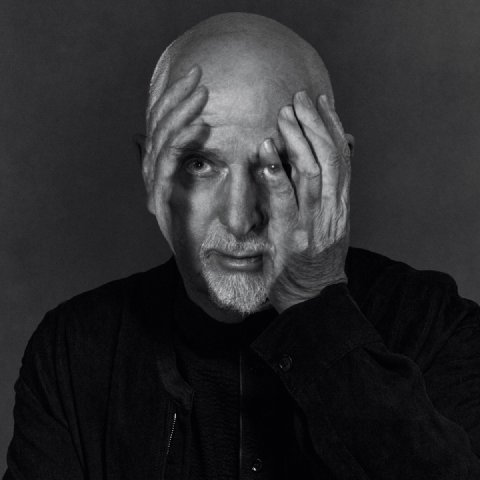
Tony Levin’s bass on Peter Gabriel’s “What Lies Ahead” told me what the amps were about. I could hear his fingers brushing the strings before each note, the resonant rumble as the note descended, the texture of the instrument as a physical object being played in a room. This wasn’t new information in the abstract—I know what Levin sounds like—but I hadn’t heard it rendered quite this way before. It was the difference between knowing a word and feeling it.
Vocals came forward in a way I didn’t expect. On both the Inspire and the Zen, voices tend to sit a step or two back in the soundstage — present, dimensional, but slightly recessed. The 45 monoblocks push them to the front without pushing them at you. It’s the difference between a musician leaning toward you and a speaker leaning toward you. One feels natural; the other feels engineered. This felt natural.
Marian Hill’s “Differently” hit differently — I’ll say it. That track, which I use as a sonic reference partly because of its precision and partly because of its weird intimacy, landed with a weight I’d previously associated only with hearing it on a much more powerful system at a dealer demo. The 45s did it at low volume. I’m still thinking about that.
Against the Zen
I’ve been living with the Decware SE84C+ since picking it up in mid-March, and before that John’s loaner SE84UFO2.1 for six weeks. So the Decware’s presentation is well-mapped in my ears at this point: holographic, precise, fast. Fred Plaut’s spatial democracy on Kind of Blue, rendered on the Zen, felt architectural — instruments in specific places, each with its own air. The EL84 in triode is lean and lit-up, great on transient detail, exceptional at revealing fine textures.
The 45 is a different proposition. The soundstage is perhaps not wider — the Zen’s holography is genuinely special — but it’s fuller. There’s more mass to the presentation. Where the Zen paints with a fine brush, the 45 works in oil. You can feel the weight of instruments. The Talking Heads’ Speaking in Tongues, which I’d been playing on the Zen, sounded more dynamic on the 45 — more physical, more alive.
I don’t want to frame this as a competition, because that’s not how it feels in practice. The Zen’s clarity is its virtue. The 45’s body is its virtue. They’re both doing something right, and what they’re doing right is different.
What’s curious is this: the conventional wisdom says low-power amps trade dynamics for finesse. My ears keep suggesting the opposite. First the 8-watt Decware. Now these three-watt monoblocks. The lower the power, the more dynamic the presentation seems. I don’t fully understand the physics, but I’ve heard it too clearly now to dismiss it.
Where This Leaves Me
I’m in an embarrassment of amplifier riches right now. The Alan Eaton 45s, the Decware SE84C+, the Dennis Had Inspire, and the Audio Research I/50 are all in the house. This is not a sustainable situation — it’s a listening project. The point is to understand what each does, and to arrive, eventually, at some clarity about what I actually want from amplification.
The 45 monoblocks have given me a strong early answer. They do something the other amps don’t: they make music feel inevitable. Not dramatic, not analytical — inevitable. Like this is what the recording was waiting for.
More listening required. But I haven’t disconnected them yet, which says something.
Currently spinning: Peter Gabriel — i/o; Marian Hill — Sable; Talking Heads — Speaking in Tongues